

How to plan a floating memorial service: a complete guide
TL;DR:
- Floating memorial services involve scattering cremated remains at least 3 nautical miles offshore legally.
- Both attended and unattended services are legal, with safety and licensing from USCG-licensed captains essential.
- Personalization and practical planning, including weather considerations, are key to a meaningful and safe ceremony.
Losing someone you love is hard enough without navigating a maze of legal rules, logistical questions, and vendor decisions. Many families are drawn to the idea of a farewell at sea but hold back because they’re unsure what’s actually allowed, how much it costs, or how to make the day feel truly meaningful. This guide walks you through every step of planning a floating memorial service, from federal regulations and safety requirements to personalization ideas and practical tips for managing wind and weather. By the end, you’ll have a clear picture of what to expect and how to create a dignified, deeply personal ocean farewell.
Table of Contents
- What is a floating memorial service?
- Legal requirements and safety for floating memorials
- Choosing and personalizing your floating service
- Practicalities: Weather, wind, and common challenges
- What most guides miss about floating memorial services
- Connect with trusted providers for your floating memorial
- Frequently asked questions
Key Takeaways
| Point | Details |
|---|---|
| Legal & safe process | Floating memorials must follow EPA and Coast Guard rules for compliance, safety, and peace of mind. |
| Attended vs. unattended | Choose between a group farewell on the water or a captain-handled service based on your family’s wishes and budget. |
| Personalization options | Readings, music, and unique traditions help make the ceremony meaningful and memorable. |
| Prepare for challenges | Account for wind, weather, and logistics to avoid common mishaps and ensure a smooth ceremony. |
| Select trusted providers | Professional, experienced memorial service providers are your best resource for a dignified, worry-free farewell. |
What is a floating memorial service?
A floating memorial service is a farewell ceremony held aboard a boat, where the cremated remains of a loved one are scattered into the ocean. It’s a dignified, deeply personal alternative to a land-based burial or memorial, and it’s growing in popularity across the United States for good reason.
The concept isn’t new. Sailors, naval officers, and coastal communities have honored their dead at sea for centuries. What has changed is accessibility. Today, families with no maritime background can arrange a beautiful, customized ceremony through experienced charter services, regardless of whether they live near the coast.
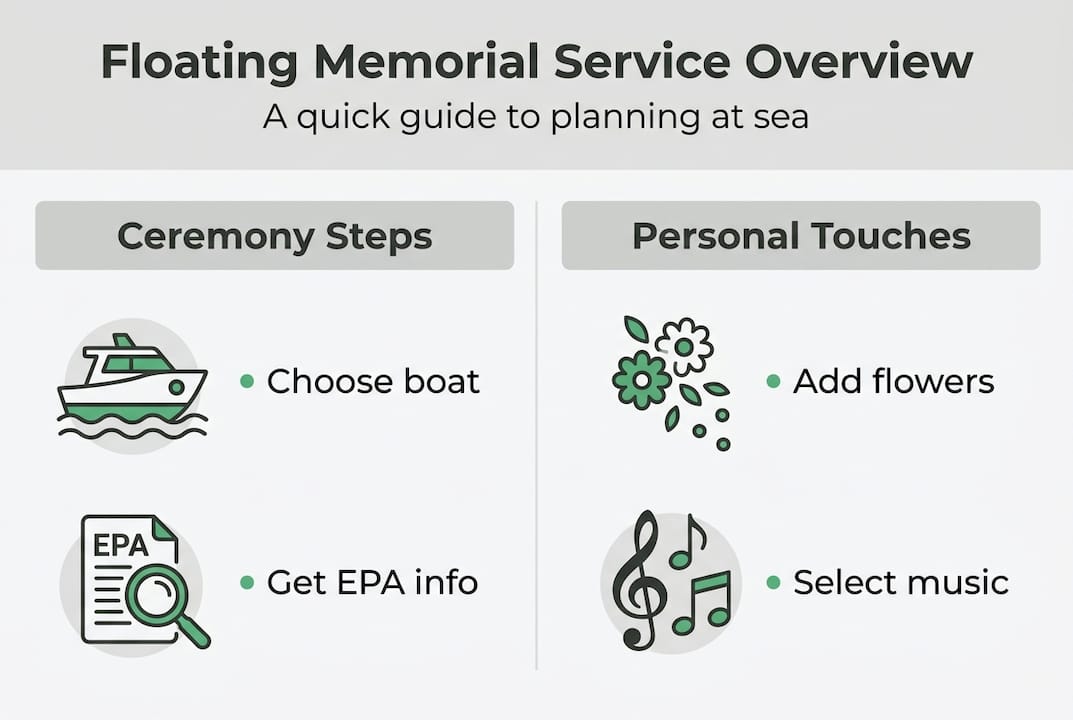
One major driver of this shift is cremation. Cremation is now chosen in over 60% of U.S. deaths, and that number continues to climb. Cremated remains are portable, flexible, and well-suited for a sea scattering. Combined with growing eco-friendly values and a cultural love of the ocean, it’s no surprise that trends in sea burials are pointing sharply upward.
There are two main formats to consider:
- Attended service: Your family and guests travel aboard the vessel and participate directly in the ceremony.
- Unattended service: A licensed captain and small crew handle the scattering on your behalf, often with a GPS record of the location.
Both are legal and meaningful. The right choice depends on your family’s needs, budget, and how many people want to be present.
Common elements of a floating memorial include personal readings, music played aboard, shared memories, and the release of biodegradable flowers into the water. Some families incorporate a mariner’s farewell, a traditional moment of silence facing the sea.
“Floating memorial services in the U.S. primarily involve scattering cremated ashes at sea from boats, conducted at least 3 nautical miles offshore per EPA regulations.”
The symbolism and traditions tied to sea funerals run deep, and many families find the open water setting profoundly healing. There’s something about the vastness of the ocean that puts grief in a different perspective.
Legal requirements and safety for floating memorials
Understanding the service’s significance is important, but ensuring it’s legal and safe is just as essential. The good news is that the federal framework is straightforward once you know it.
The primary law governing sea burials in the U.S. is the Marine Protection, Research, and Sanctuaries Act (MPRSA), enforced by the EPA. Here’s what it requires:
- Scattering must occur at least 3 nautical miles from shore.
- Only human cremated remains may be scattered.
- Only biodegradable items, such as flowers or wreaths, may be placed in the water. No plastics.
- You must notify the EPA within 30 days after the service. No advance permit is needed.
- Keep a record of the GPS coordinates, date, and time of the scattering.
On the safety side, USCG-licensed captains and approved vessels are required. This isn’t just a legal formality. Licensed captains know how to read conditions, manage a vessel safely offshore, and handle the ceremony with professionalism. Never book a service with an unlicensed operator.
“Always verify that your charter captain holds a current U.S. Coast Guard license before booking any offshore memorial service.”
Veterans have an additional option. The U.S. Navy offers a separate burial at sea program for eligible active duty, retired, and honorably discharged veterans, including the scattering of cremated remains from a Navy vessel at no cost.
For families working through ceremony planning steps, understanding these rules early prevents last-minute surprises. And if you’re committed to an environmentally responsible farewell, the eco-friendly guidance available covers everything from biodegradable urns to flower choices.
Pro Tip: Ask your charter provider to handle the EPA notification on your behalf. Many experienced services include this as part of their package, which takes one task off your plate during a difficult time.
Choosing and personalizing your floating service
Once legal and safety details are handled, it’s time to shape a fitting farewell. The first decision is whether to go attended or unattended.
| Feature | Unattended | Attended |
|---|---|---|
| Cost range | $195 to $395 | $900 to $2,200+ |
| Family present | No | Yes |
| Personalization | Limited | Full |
| Emotional closure | Lower | Higher |
| Best for | Budget-conscious, remote families | Groups seeking shared experience |
Unattended services are practical and affordable, while attended services offer closure and a shared emotional experience that many families find irreplaceable. Pricing varies by location, vessel size, and guest count.
Personalizing the ceremony is where the experience becomes truly yours. Here are ways to add meaning:
- Music: Play your loved one’s favorite songs aboard the vessel or via a portable speaker.
- Personal readings: Poetry, scripture, or a handwritten letter read aloud on the water.
- Mariner’s farewell: A traditional moment where guests face the sea in silence before the scattering.
- Flower release: Scatter biodegradable petals or a wreath alongside the ashes.
- Shared stories: Invite guests to share a memory before or after the scattering.
For a deeper look at personalizing maritime farewells, there are options that go well beyond the basics. Some families combine a shore ceremony with the offshore scattering, allowing elderly or remote relatives to participate from land while the core group travels out to sea.
When it comes to the actual release, use a scattering tube or basket rather than pouring directly from an urn. This gives you control and keeps the moment dignified. Position yourself so the wind is at your back. Your captain will advise on the best spot aboard the vessel.
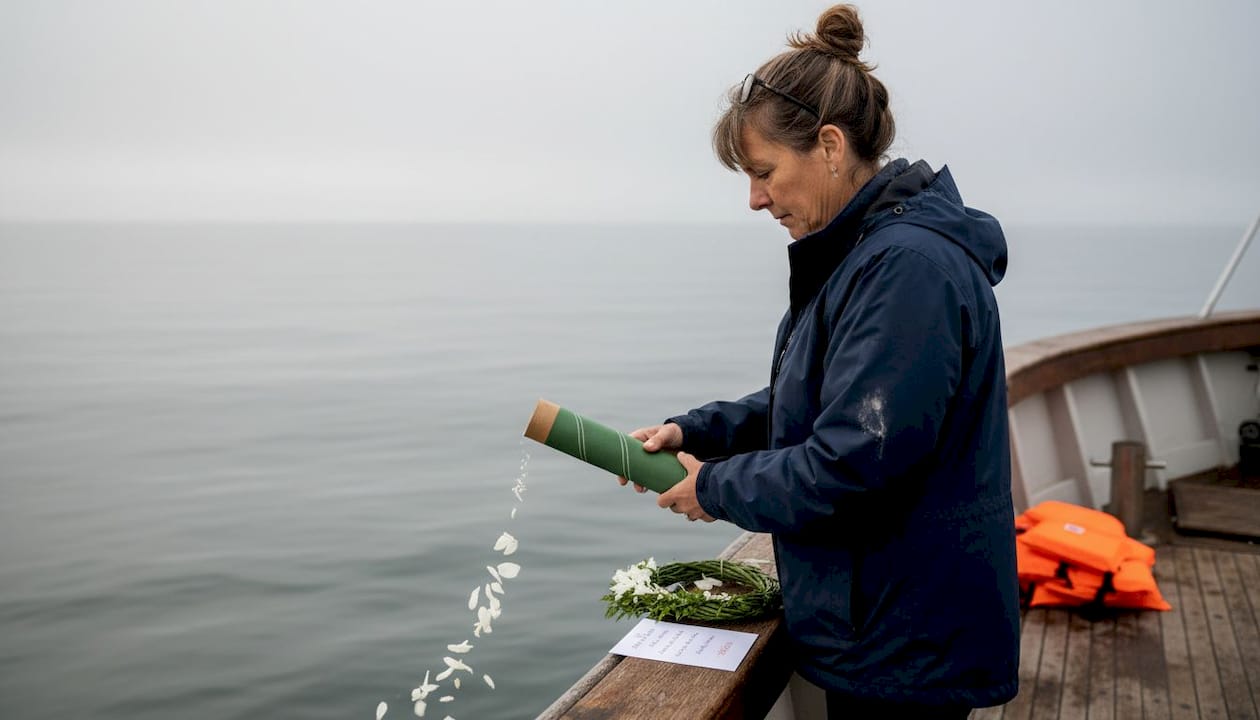
Pro Tip: Consider ordering a personalized at-sea memorial keepsake, such as a healing bracelet or memorial glass, so each guest leaves with something tangible to remember the day. The yacht charter benefits extend beyond the ceremony itself, offering comfort and privacy that smaller vessels simply can’t match.
Practicalities: Weather, wind, and common challenges
Personalizing the ceremony is key, but practical considerations can affect your plans. The ocean doesn’t follow a schedule, and families who prepare for real-world variables have a much smoother experience.
Here are the most common challenges and solutions:
| Challenge | Practical solution |
|---|---|
| Wind blowback during scattering | Use a controlled-release tube; stand with wind at your back |
| Rough seas or unsafe conditions | Book with a captain who offers free rescheduling |
| Biodegradable urn fails to open | Avoid urns for open-water scattering; use tubes instead |
| Elderly or remote family can’t attend | Choose unattended service with GPS coordinates shared later |
| Emotional overwhelm during ceremony | Brief the captain in advance; allow unscripted pauses |
Wind blowback is common, and it’s one of the most preventable mishaps at a sea memorial. A controlled-release tube or scattering basket solves most of this problem. Your captain should also be able to position the vessel to minimize exposure.
Weather is the bigger wildcard. Experienced captains will postpone or reschedule if conditions are unsafe, and any reputable provider will have a clear policy on this. Always confirm the rescheduling policy before you book.
Biodegradable urns deserve special mention. Biodegradable urns often fail at sea, floating too long or failing to open at all. They’re better suited for burial in soil. For ocean scattering, a simple scattering tube is more reliable and more dignified.
- Confirm your captain’s rescheduling policy in writing.
- Practice using your scattering tube before the day of the service.
- Arrive at the dock early to allow time for boarding and briefing.
- Designate one family member to coordinate the ceremony flow.
- Review sustainable burial logistics to ensure your tribute items meet EPA guidelines.
Pro Tip: Schedule your service on a weekday morning when seas tend to be calmer and charter availability is higher. Early morning light also makes for a more serene and photogenic ceremony.
What most guides miss about floating memorial services
With practicalities in mind, here’s what most how-to guides miss about the process. They focus on the ceremony details but underestimate how much the outcome depends on the provider you choose and the practical decisions you make weeks before the day.
We’ve seen families put enormous thought into readings and music, only to be caught off guard by wind, a poorly timed release, or a captain who treated the event like a routine charter. The emotional weight of this moment is real. A provider who understands that weight, and builds their service around it, makes an enormous difference.
Don’t rush the planning. This is a final, irreversible act, and you deserve time to ask questions, clarify logistics, and feel confident in your choices. Pre-service communication with your captain is not optional. It’s essential.
The personalization guide we recommend goes beyond surface-level suggestions. It addresses the emotional architecture of the ceremony, not just the checklist. That distinction matters more than most families realize until they’re standing on the water.
Connect with trusted providers for your floating memorial
Planning a floating memorial service means trusting the right people with one of the most significant moments your family will share. Compassion, experience, and attention to detail aren’t optional qualities in a provider. They’re the foundation of a dignified farewell.
Maritime Burials connects families across the United States with experienced, USCG-licensed captains and a full catalog of ceremonial products, from biodegradable flowers and scattering tubes to keepsakes and healing bracelets. Whether you’re ready to book or still exploring options, you can review the Joyful Memory service, browse the full service offerings, or visit the booking information page to take the next step at your own pace.
Frequently asked questions
Do I need a permit to scatter ashes at sea in the US?
No advance permit is required. You must notify the EPA within 30 days after the scattering, including the date, location, and GPS coordinates.
What happens if the weather is bad on the day of our floating memorial?
Experienced captains will postpone or reschedule if conditions are unsafe. Always confirm the rescheduling policy before booking, as captains can reschedule for weather without penalty from a reputable provider.
Can I include flowers or other tributes in the sea scattering?
Yes. You may use biodegradable flowers or wreaths, but only biodegradable items are allowed. Plastics, synthetic materials, and non-biodegradable tributes are prohibited under EPA rules.
How can I make the floating memorial ceremony more personal?
Add personal readings, music, or mariner traditions to the service. You can also combine a shore ceremony with the offshore scattering to include family members who cannot travel by boat.
Are pet ashes allowed on a floating memorial service?
No. The EPA allows only human cremated remains for ocean scattering under the MPRSA. Pet ashes require a separate arrangement through a licensed pet cremation or burial service.
Recommended
- Ocean farewell: guide to eco-friendly at-sea memorials – Maritime Burials at Sea - Nationwide Service Provider
- Step-by-step guide to sustainable burial at sea – Maritime Burials at Sea - Nationwide Service Provider
- Cremation guide: elegant sea memorials and farewells – Maritime Burials at Sea - Nationwide Service Provider
- Honor cremated remains with personalized at-sea memorials – Maritime Burials at Sea - Nationwide Service Provider
