

Step-by-step guide to sustainable burial at sea
Losing someone you love is hard enough without the added weight of wondering whether their final farewell truly honored who they were. For families who care deeply about the environment, a traditional land burial can feel at odds with a lifetime of eco-conscious values. A sustainable burial at sea offers something different: a ceremony that returns your loved one to the natural world with dignity, intention, and minimal environmental impact. This guide walks you through every stage of planning, from understanding the legal framework to conducting the ceremony itself, so you can focus on what matters most.
Table of Contents
- Understanding sustainable sea burials
- Preparing for the ceremony: requirements and planning
- Step-by-step: how to conduct a sustainable burial ceremony at sea
- Ensuring compliance and honoring memories
- Find trusted providers and eco-friendly options
- Frequently asked questions
Key Takeaways
| Point | Details |
|---|---|
| Eco-friendly choices | Select biodegradable urns and avoid marine pollution to honor nature and regulations. |
| Step-by-step planning | Careful preparation ensures your ceremony meets both family wishes and environmental standards. |
| Legal compliance | Verify documentation and follow EPA regulations to protect marine life and your peace of mind. |
| Personalized farewells | Customize your ceremony for a meaningful tribute that celebrates your loved one’s legacy. |
| Trusted providers | Reliable maritime services make sustainable sea burials accessible and straightforward for families. |
Understanding sustainable sea burials
A sustainable burial at sea is not simply scattering ashes from a dock. It is a carefully planned ceremony that prioritizes biodegradable materials, follows federal environmental guidelines, and actively avoids introducing harmful substances into the ocean. The goal is to honor your loved one while leaving the marine ecosystem as undisturbed as possible.
What makes a burial ceremony truly sustainable comes down to three core principles:
- Materials: Everything that enters the water must be biodegradable. This means no plastic flowers, no synthetic fabrics, and no non-degradable containers.
- Location: The ceremony must take place at a federally approved distance from shore, typically three nautical miles or more.
- Documentation: Families must report the burial to the EPA within 30 days of the ceremony.
Avoiding non-biodegradable materials is essential for compliance with EPA regulations and for protecting marine environments from long-term debris. This is not a technicality. It is the foundation of what separates a sustainable ceremony from one that inadvertently harms the very ocean it celebrates.
Families are increasingly drawn to this option because it aligns a farewell with a loved one’s values. Exploring eco-friendly at-sea memorials reveals just how many meaningful, personalized options exist within these guidelines. And for those who want a ceremony that feels deeply personal, personalized maritime farewells show how families have created unique, moving experiences on the water.
“The ocean does not belong to us. A sustainable burial is our way of returning a loved one to nature without taking anything away from it.”
Preparing for the ceremony: requirements and planning
Planning a sustainable burial at sea involves more logistics than most families expect. Starting early, ideally four to six weeks before the intended date, gives you time to gather paperwork, source eco-friendly materials, and coordinate with a licensed maritime provider.
Legal and documentation requirements
EPA-aligned regulations require the use of biodegradable materials and proper documentation for sea burials. Here is a summary of what you will need:
| Requirement | Details |
|---|---|
| EPA notification | Must be submitted within 30 days after the burial |
| Minimum distance from shore | 3 nautical miles for cremated remains; 3+ miles for whole body |
| Water depth (whole body) | Minimum 600 feet |
| Biodegradable materials | Required for all items entering the water |
| Death certificate | Needed for coordination with your maritime provider |
Choosing eco-friendly materials
Your choice of urn or shroud is one of the most important decisions you will make. Options include:
- Salt-based biodegradable urns that dissolve within hours of entering the water
- Natural fiber shrouds for whole-body burials
- Pressed flower arrangements made from organic, pesticide-free blooms
- Biodegradable wreaths that float briefly before sinking naturally
Scheduling with a maritime provider
Not every charter captain is experienced with burial ceremonies. Look for providers who specialize in meaningful sea farewells and can guide you through both the ceremonial and legal aspects. Ask specifically about their experience with EPA compliance and their process for post-ceremony documentation.
Preparing family and guests
Let guests know what to expect: the boat ride, the open water, and the emotional weight of the moment. Advise them to dress in layers, bring motion sickness remedies if needed, and leave synthetic materials at home if they plan to release anything into the water.
Pro Tip: Ask your maritime provider if they can supply a printed ceremony program on recycled paper. Small details like this reinforce the eco-conscious spirit of the day without adding extra planning burden to your family.
Step-by-step: how to conduct a sustainable burial ceremony at sea
With preparation complete, here is how to conduct a respectful, sustainable ceremony step by step.
- Board the vessel and brief guests: Once everyone is aboard, the captain or ceremony leader should briefly explain the schedule, safety procedures, and the significance of the eco-friendly choices made for the day.
- Travel to the approved location: The vessel moves to the designated area, at least three nautical miles offshore. EPA guidelines recommend specific locations and methods for eco-friendly sea burials to ensure protection of marine life.
- Open the ceremony: A family member, officiant, or captain leads readings, prayers, or personal tributes. Music played through the vessel’s speakers adds atmosphere without any environmental impact.
- Release the urn or remains: The biodegradable urn is gently lowered into the water or cremated remains are scattered. If flowers are released, confirm they are organic and free of plastic wrapping.
- Observe a moment of silence: Allow the family time to watch, reflect, and say goodbye at their own pace. This is the emotional core of the ceremony.
- Collect any non-biodegradable items: Before leaving, gather any items that should not enter the water, such as candles, glass, or synthetic ribbons.
- Return to shore and document: The captain logs the GPS coordinates, date, and time. This information is used to complete the EPA notification within 30 days.
For families incorporating cremated remains, reviewing ash scattering ceremony steps can help you personalize the moment further. You can also explore personalized at-sea memorials for ideas on keepsakes and tributes that complement the ceremony.
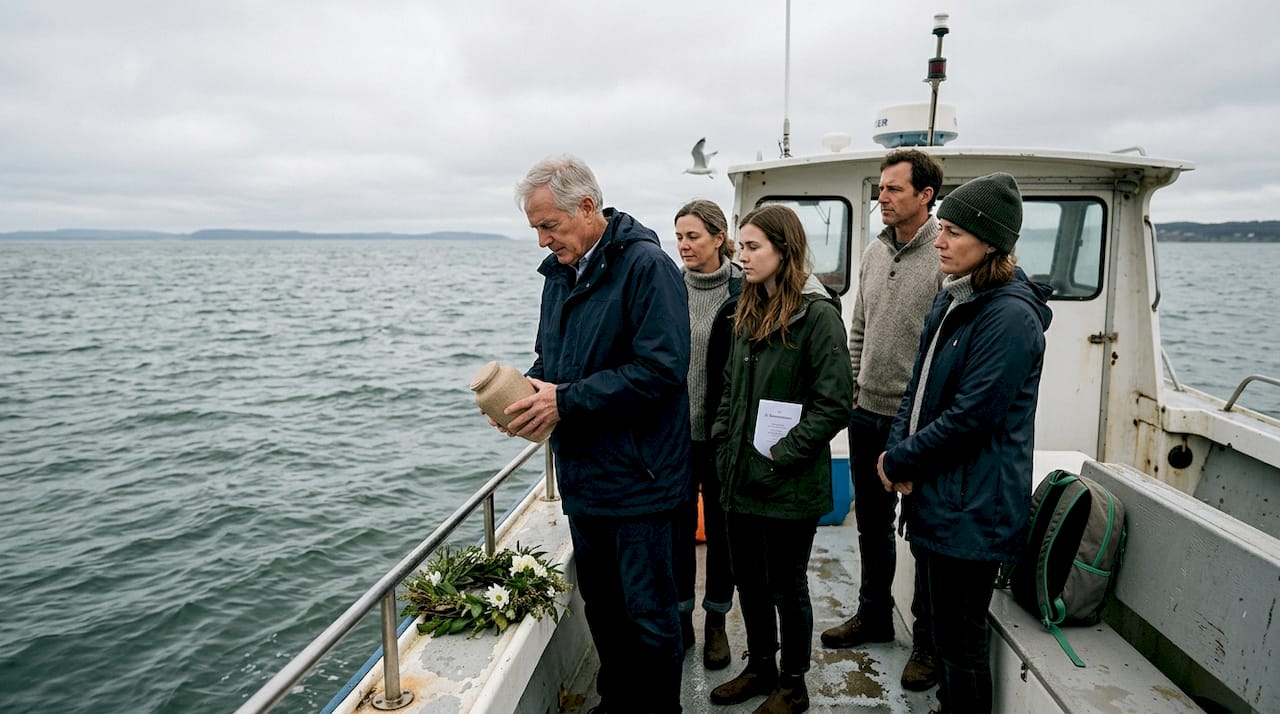
Eco-friendly vs. traditional ceremony elements
| Element | Traditional option | Sustainable alternative |
|---|---|---|
| Urn | Metal or ceramic | Salt-based biodegradable urn |
| Flowers | Synthetic or wrapped in plastic | Organic, loose-petal blooms |
| Wreath | Foam-based floral foam | Natural fiber and dried botanicals |
| Program | Glossy printed paper | Recycled or seed paper |
| Keepsake | Plastic memorial item | Wooden or natural stone keepsake |
Pro Tip: Coordinate with your provider to have the GPS coordinates of the burial site engraved on a memorial stone or keepsake. Families often find comfort in knowing the exact place where their loved one rests.
Ensuring compliance and honoring memories
After the ceremony, the work is not quite finished. Verifying that your burial met all environmental and legal standards protects both your family and the marine habitat your loved one now rests within.
Post-ceremony compliance steps
- Confirm the captain has recorded the GPS coordinates, date, time, and number of attendees
- Submit the EPA burial notification form within 30 days of the ceremony
- Retain a copy of the death certificate and any permits for your records
- Request a written confirmation from your maritime provider that all materials used were biodegradable
Proper verification of sea burial compliance protects both families and marine habitats. Keeping thorough records also gives you peace of mind that your loved one’s farewell was handled with the care and integrity it deserved.
Eco-friendly ways to honor your loved one after the ceremony
The ceremony is one moment. The memory lasts a lifetime. Consider these meaningful, low-impact ways to keep your loved one’s spirit present:
- Plant a native tree or garden in their name
- Commission a piece of memorial jewelry made from natural materials
- Create a photo book of the ceremony to share with family members who could not attend
- Donate to an ocean conservation organization in their honor
Exploring the luxury burial at sea marketplace can connect you with curated memorial products that align with your values. For families who want a ceremony that is both beautiful and deeply intentional, elegant sea memorials offer inspiration for every stage of the process.
“Honoring someone’s life does not end when the ceremony does. Every choice you make afterward, from the keepsake you select to the cause you support, is part of their legacy.”
Find trusted providers and eco-friendly options
When you are ready to take the next step, working with a provider who understands both the emotional and environmental dimensions of a sea burial makes all the difference.
Maritime Burials connects families with captain-led yacht ceremonies across the United States, offering a full range of eco-conscious ceremony options. From biodegradable urns that dissolve gently in the ocean to a yacht burial ceremony that accommodates up to 49 guests in comfort and dignity, every detail is designed to honor your loved one without compromising the environment. Families outside the continental U.S. can also explore global sea burial booking for international ceremony options. Whatever your vision, Maritime Burials is here to help you create a farewell that is as meaningful as the life it celebrates.
Frequently asked questions
What makes a sea burial ceremony sustainable?
A sustainable sea burial uses biodegradable materials, follows EPA environmental regulations, and avoids introducing any marine pollution. Every item that enters the water must be capable of breaking down naturally without harming marine life.
What paperwork is required for a sustainable burial at sea?
You need to submit an EPA notification within 30 days of the ceremony, retain a copy of the death certificate, and obtain written confirmation from your provider that proper documentation and biodegradable materials were used throughout.
Can cremated remains be included in a sustainable sea burial?
Yes, cremated remains are fully permitted as long as they are placed in biodegradable urns or scattered directly, in compliance with EPA distance and location requirements. Salt-based urns are among the most popular and environmentally responsible choices.
What is the typical process for booking a sustainable burial at sea?
You select a licensed maritime provider, choose your eco-friendly materials, schedule the ceremony date, and ensure all required documents are in order before the ceremony takes place. Nationwide providers like Maritime Burials can guide you through each step from start to finish.
Recommended
- Ocean burials guide: personalized maritime farewells – Maritime Burials at Sea - Nationwide Service Provider
- Guide to burials at sea for meaningful farewells – Maritime Burials at Sea - Nationwide Service Provider
- Nationwide marketplace for luxury burial at sea: 63% cremation – Maritime Burials at Sea - Nationwide Service Provider
- Ocean farewell: guide to eco-friendly at-sea memorials – Maritime Burials at Sea - Nationwide Service Provider
