

Sea vs. land funerals: Choosing the right memorial
Most families begin planning a memorial with one assumption already in place: the service will happen on land. That assumption goes unquestioned for generations, even when the person being honored spent their life near the ocean, on the water, or simply dreamed of a different kind of farewell. Today, more families are stepping back from that default and asking what truly fits. Sea funerals offer a distinct path, one shaped by nature, symbolism, and a growing awareness that a meaningful goodbye does not have to follow a traditional script. This guide walks you through the real differences between sea and land funerals so you can choose with confidence.
Table of Contents
- Understanding the basics: What defines sea and land funerals?
- How ceremonies differ: Experience, rituals, and logistics
- Regulatory requirements and environmental impact
- Long-term meaning and memorialization: Grief, memory, and legacy
- Why the right memorial is about more than tradition
- Personalized sea memorial options with Maritime Burials at Sea
- Frequently asked questions
Key Takeaways
| Point | Details |
|---|---|
| Ceremony differences | Sea and land funerals differ greatly in experience, rituals, and logistics. |
| Eco-friendly impact | Sea funerals typically have a lower environmental footprint than land burials. |
| Legal requirements | Strict rules govern burial at sea, including EPA distance, depth, and material guidelines. |
| Memorial options | Choose the ceremony that aligns best with your family’s values and remembrance wishes. |
Understanding the basics: What defines sea and land funerals?
A land funeral follows a familiar structure. There is typically a visitation period, a formal service, and a graveside ceremony. The body is buried in a cemetery plot, often marked with a headstone, giving family members a permanent physical location to return to. Embalming, caskets, and burial vaults are standard components, and the entire process is governed by state and local regulations.
A sea funeral works differently at every stage. The ceremony takes place on the water, usually aboard a chartered vessel that travels offshore. Families may scatter cremated remains, or in rarer cases, arrange a full-body burial using a weighted, biodegradable casket. The ocean itself becomes the resting place, and the ceremony often incorporates readings, flowers, music, and moments of reflection as the vessel moves through open water.
Families choose each option for very different reasons. Land funerals offer continuity with religious tradition, community expectation, and the comfort of a gravesite to visit. Sea funerals appeal to those who had a deep personal connection to the ocean, those who prioritize environmental values, or those who simply want something more intimate and unconventional.
The trends reflect a broader cultural shift. The US cremation rate reached 63.4% in 2025, with green burials accounting for around 4% of all services. Sea burials remain rare but are growing steadily as awareness increases.
Key reasons families consider each option:
- Land funerals: Religious tradition, community support, permanent gravesite
- Sea funerals: Ocean connection, eco-consciousness, intimate ceremony
- Both: Personalization, dignity, and honoring the individual’s story
Pro Tip: Before comparing logistics, sit with your family and ask what the person being honored actually valued. Their relationship with nature, water, and ceremony will guide you more than any checklist.
If you want to understand the deeper meaning behind these ceremonies, reading about meaningful sea farewells can help frame the decision before you get into the details. The sea funeral symbolism woven into these ceremonies often surprises families who assumed the experience would feel unfamiliar.
How ceremonies differ: Experience, rituals, and logistics
The emotional texture of a land funeral and a sea funeral are genuinely different, not just in setting but in how they feel from start to finish.
A typical land ceremony unfolds over one to three days. There is a visitation where friends and family gather to pay respects, followed by a formal service at a funeral home or place of worship. The graveside portion is usually brief but carries significant weight. A headstone is placed later, creating a lasting marker. The structure is familiar, which can be comforting for many families.
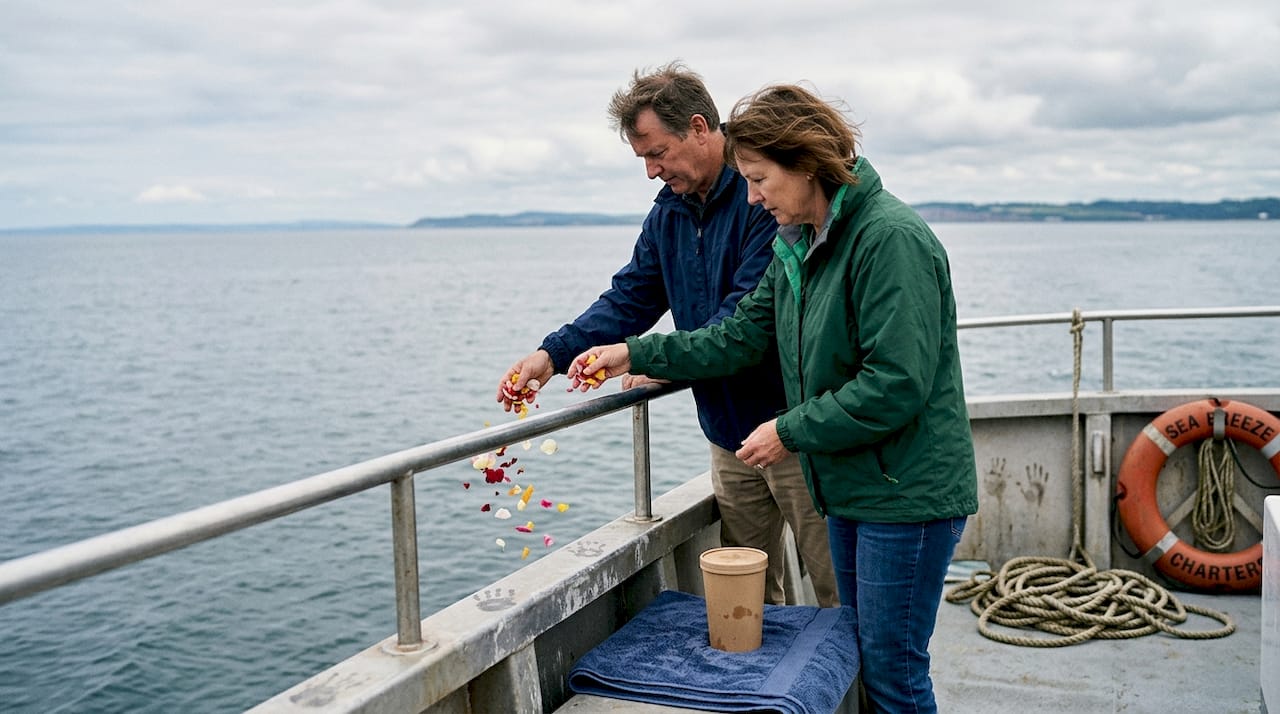
A sea ceremony compresses that experience into a single voyage. Families board a chartered vessel, often with close friends and immediate family, and travel offshore. Once at sea, the service begins with readings, music, or prayers chosen by the family. Ashes are scattered or an ecological urn is placed in the water. The return journey often becomes its own moment of quiet reflection.
| Feature | Sea funeral | Land funeral |
|---|---|---|
| Location | Offshore, open water | Cemetery or place of worship |
| Attendance | Typically intimate, small group | Can be large, open to community |
| Duration | Single ceremony, same day | Multi-day process |
| Physical marker | None (ocean is the resting place) | Headstone or grave marker |
| Official requirements | EPA notification, biodegradable materials | State and local burial permits |
| Veteran options | Free Navy or Coast Guard burial | Standard cemetery options |
Logistics matter more at sea than most families expect. Wind direction, tide timing, and weather windows all influence scheduling. Captained yacht charters handle the navigation, but families should build flexibility into their timeline. The EPA rules for sea funerals also specify that veterans may qualify for complimentary Navy or Coast Guard burial services, a meaningful option worth exploring early.
Pro Tip: Weather and tide can affect sea ceremonies significantly. When booking, ask about rescheduling policies and what happens if conditions change on the day of the service.
For families wanting to go deeper on what a personalized maritime farewell actually looks like in practice, the range of options is broader than most people initially imagine.
Regulatory requirements and environmental impact
Beyond rituals, key legal and ecological differences shape which option best aligns with your values.
The EPA requires sea burials to take place at least 3 nautical miles offshore, with full-body burials requiring a minimum depth of 600 feet. All materials must be biodegradable, and families must notify the EPA within 30 days of the burial. These rules apply nationwide, though some coastal states have additional requirements.
Land burials operate under a patchwork of state and local rules. Embalming is required in some states under certain conditions. Cemetery regulations vary widely, covering everything from headstone dimensions to the types of containers allowed. Families often navigate these requirements through a funeral director, which adds cost and complexity.
| Factor | Sea funeral | Land funeral |
|---|---|---|
| Chemical use | None required | Embalming fluids common |
| Land use | None | Cemetery plot required |
| Biodegradability | Required by law | Optional (green burial) |
| Ongoing maintenance | None | Plot upkeep, fees |
| Ecosystem impact | Can return nutrients to ocean | Chemicals can leach into soil |
The environmental contrast is significant. Land burials carry higher impact through chemical use, land consumption, and resource-intensive caskets. Sea burials, when done correctly, have minimal environmental footprint and can actually contribute nutrients back to the ocean ecosystem.
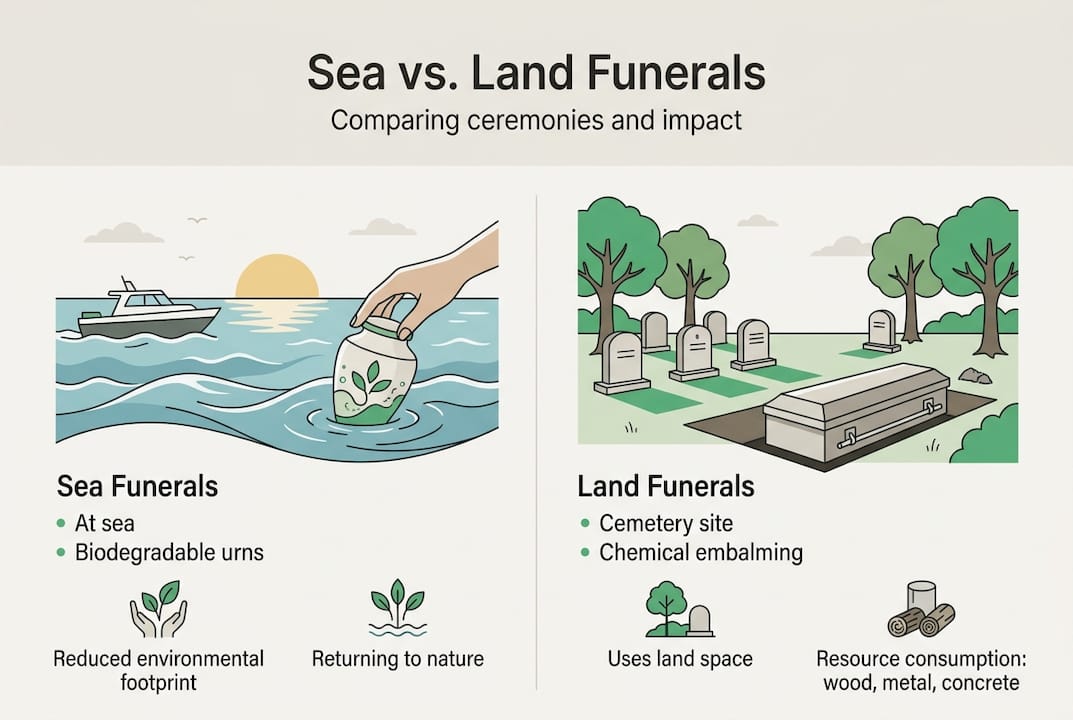
Common pitfalls include using non-biodegradable flowers, synthetic urns, or items that violate EPA guidelines. Missing the 30-day reporting window is another frequent oversight. The eco benefits of sea burials are real, but only when the ceremony follows proper protocol.
Pro Tip: Federal EPA rules are the floor, not the ceiling. Always verify your specific state’s requirements, especially if the ceremony takes place near a marine protected area or in coastal waters with local ordinances.
For families committed to environmental values, exploring sustainable sea burial steps and eco-friendly at-sea memorials can help you plan a ceremony that genuinely reflects those values.
Long-term meaning and memorialization: Grief, memory, and legacy
Once families understand the legal and ecological side, it is important to consider how each choice shapes memory and ongoing connection.
Land funerals offer something tangible: a place to return to. Families can visit the grave on anniversaries, leave flowers, and feel a physical connection to where their loved one rests. That permanence matters deeply for many people, particularly those whose grief process involves ritual and place.
Sea funerals offer something different. The ocean is always moving, always present, and for families with a genuine connection to the water, that constant motion can feel like a living tribute rather than a static marker. As one perspective from Spirit Oceano describes it, the sea provides “eternal movement” as a form of remembrance, though it does not offer a physical site to visit.
This distinction matters for grief. Some people need a specific place. Others find that the absence of a fixed location forces them to carry the memory internally, which can ultimately feel more personal.
Ways families maintain connection after a sea burial:
- Memorial keepsake jewelry containing a small portion of ashes
- Framed photographs from the ceremony
- Annual gatherings on the water
- Personalized urns kept at home before scattering
- Charitable donations in the loved one’s name to ocean conservation
The land burial model provides familiar mementos and a fixed site, while sea burial offers freedom and formless remembrance. Neither is better. They serve different emotional needs.
For families navigating this question, looking into personalized at-sea memorials and serene charter memorials can open up options that bridge the emotional gap between the two approaches.
Why the right memorial is about more than tradition
Here is something we see often: families who choose a sea funeral initially feel uncertain, not because it feels wrong, but because it feels unfamiliar. They worry about what others will think, whether it is “proper,” or whether they are honoring their loved one adequately without a gravestone.
That uncertainty comes from tradition, not from values. And tradition, while meaningful, is not the same as meaning.
The best memorial is the one that reflects who the person actually was. If they lived on the water, worked near the sea, or simply found peace in the ocean’s presence, a land burial may honor the logistics of death without honoring the life. A sea ceremony, done with intention and care, can carry far more emotional truth.
We also see the reverse. Some families feel genuine comfort in a gravesite, in the ability to return, to tend, to speak to a specific place. That is not lesser. It is a legitimate form of grief and remembrance.
What matters is that the decision comes from reflection, not default. Explore the burial at sea trends shaping how families think about this choice today. The range of options available now makes it easier than ever to find a ceremony that fits.
Personalized sea memorial options with Maritime Burials at Sea
If you are considering a sea funeral for your loved one, Maritime Burials at Sea offers full-service, dignified ceremonies designed around your family’s specific wishes. Every detail can be tailored, from the vessel and route to the readings, music, and ceremonial products.
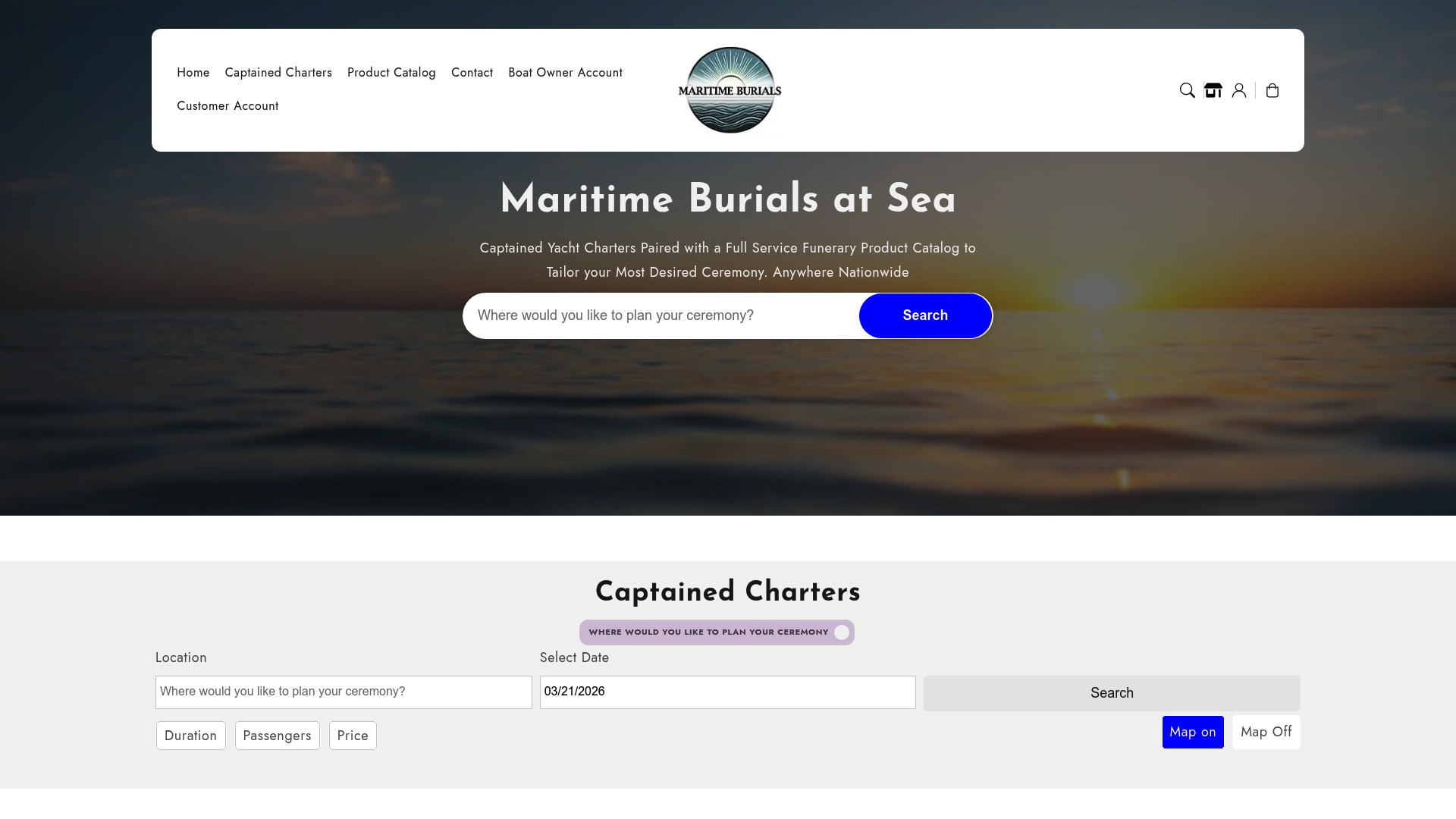
Choose from a curated selection of biodegradable urn options designed to return naturally to the ocean. For families wanting a truly memorable experience, the 75-foot Bertram yacht accommodates up to 49 guests in a setting that feels both luxurious and deeply respectful. Complete the tribute with memorial keepsake jewelry that allows family members to carry a lasting connection with them long after the ceremony.
Frequently asked questions
What is required for a legal sea funeral in the United States?
Sea funerals must take place at least 3 nautical miles offshore, use only biodegradable materials, and be reported to the EPA within 30 days of the burial. Full-body burials require a minimum water depth of 600 feet.
Can anyone have a burial at sea, or are there restrictions?
Most people can arrange a sea burial with proper planning. Veterans may qualify for complimentary Navy or Coast Guard burial services, and it is worth noting that pets are not permitted at sea under current EPA regulations.
How does the cost of sea and land funerals compare?
Sea burials often cost less over time because they eliminate cemetery plot fees and ongoing maintenance. Traditional funerals carry higher costs due to caskets, embalming, plot purchase, and headstone expenses that add up quickly.
What are the main environmental differences between land and sea funerals?
Land burials use more chemicals and consume permanent land space, while sea burials avoid both and can return natural nutrients to the ocean ecosystem when biodegradable materials are used correctly.
Recommended
- Symbolism in sea funerals: traditions and eco options – Maritime Burials at Sea - Nationwide Service Provider
- Nationwide marketplace for luxury burial at sea: 63% cremation – Maritime Burials at Sea - Nationwide Service Provider
- Ocean farewell: guide to eco-friendly at-sea memorials – Maritime Burials at Sea - Nationwide Service Provider
- Honoring Loved Ones with Serenity: The Benefits of Renting a Yacht Cha – Maritime Burials at Sea - Nationwide Service Provider
