

Memorial keepsake ideas for honoring loved ones at sea
Choosing a keepsake after a sea ceremony is harder than most families expect. You’ve just shared a profound, irreversible farewell on open water, and now you need something tangible to hold onto. The options range from artisan glass art infused with ashes to GPS coordinate certificates, biodegradable urns, and wearable jewelry. Each carries different rules, timelines, and emotional weight. This guide walks you through a clear framework for evaluating every option, so you can choose a keepsake that is meaningful, legally sound, and built to last as long as your family needs it to.
Table of Contents
- How to choose the right memorial keepsake for a sea ceremony
- Ocean-themed glass and resin keepsakes: Permanent personal tributes
- Keepsake jewelry and miniature urns: Sharing memories, staying connected
- Ceremonial keepsakes: GPS certificates, pouches, and eco urns
- Comparing memorial keepsake options: What best fits your family’s needs?
- A perspective: Why hyper-personal keepsakes matter more than standard tokens
- Find memorial keepsakes and sea ceremony services
- Frequently asked questions
Key Takeaways
| Point | Details |
|---|---|
| Personalization matters | Keepsakes gain meaning by incorporating ashes, sand, or shells from the scattering site. |
| Permanent vs. ceremony | Glass, resin, and jewelry keepsakes offer longevity that ceremonial urns cannot. |
| Legal compliance | Sea scattering requires permits, but home keepsakes do not need EPA reporting. |
| Family sharing | Mini urns and jewelry let families divide ashes for individual remembrance. |
| Eco options exist | Biodegradable urns and sustainable materials provide greener ceremony keepsakes. |
How to choose the right memorial keepsake for a sea ceremony
Before you browse options, it helps to know what criteria actually matter. Not every keepsake works for every family, and the wrong choice can leave you with something that feels disconnected from the ceremony you planned.
Here are the core factors to weigh:
- Personalization: Can the keepsake incorporate ashes, site sand, or shells from the actual scattering location? Items tied to the physical place carry far more emotional resonance.
- Permanence: Are you looking for something to display at home for decades, or a ceremonial object that serves its purpose on the day and dissolves naturally?
- Eco-friendliness: Some families want every element of the farewell to leave a minimal footprint. Eco-friendly sea memorials use biodegradable materials that return to the ocean without harm.
- Legal context: The EPA requires sea scattering to occur at least 3 nautical miles offshore, but keepsakes kept at home or worn as jewelry are entirely exempt from those regulations. This matters if you want to retain a portion of ashes without any reporting requirements.
- Family sharing: If multiple relatives want a personal token, you’ll need a plan for dividing ashes before the ceremony.
Pro Tip: Decide early whether you want one central keepsake or several smaller ones distributed among family members. This affects how much ash you set aside before the scattering.
Thinking through these five factors first saves you from impulse purchases that don’t align with your family’s values or practical needs. Once you have a clear picture of what matters most, the right category of keepsake becomes obvious.
Ocean-themed glass and resin keepsakes: Permanent personal tributes
For families who want something permanent and visually striking, artisan glass and resin keepsakes are in a category of their own. These are handcrafted objects that literally contain a portion of your loved one’s ashes, fused into ocean-themed art.
Here’s how the process typically works:
- You send a small portion of ashes to the artisan studio.
- The studio mixes the ashes into molten glass or liquid resin during the crafting process.
- Ocean motifs like waves, sea glass colors, and coral forms are shaped around the ash inclusion.
- The finished piece is inspected, packaged, and shipped to you.
According to Cremation Art Glass, only about 0.5 to 2 teaspoons of ashes are needed for most pieces, which means you can easily create multiple keepsakes from a single set of remains. Pieces typically range from 2 to 8 inches and arrive within 2 to 6 weeks of the studio receiving the ashes.
“The ocean memorial captures the spirit of the sea in every curve, making it one of the most requested keepsakes for families who chose a water farewell.”
What makes these pieces extraordinary is the hyper-personalization possible. Artisans can embed small seashells, grains of sand from the scattering site, or even fragments of a favorite piece of sea glass directly into the resin or glass. The result is a one-of-a-kind object that no catalog item can replicate. For more ideas on this approach, personalized ocean keepsakes offer a broader look at how families are combining ceremony and craft.
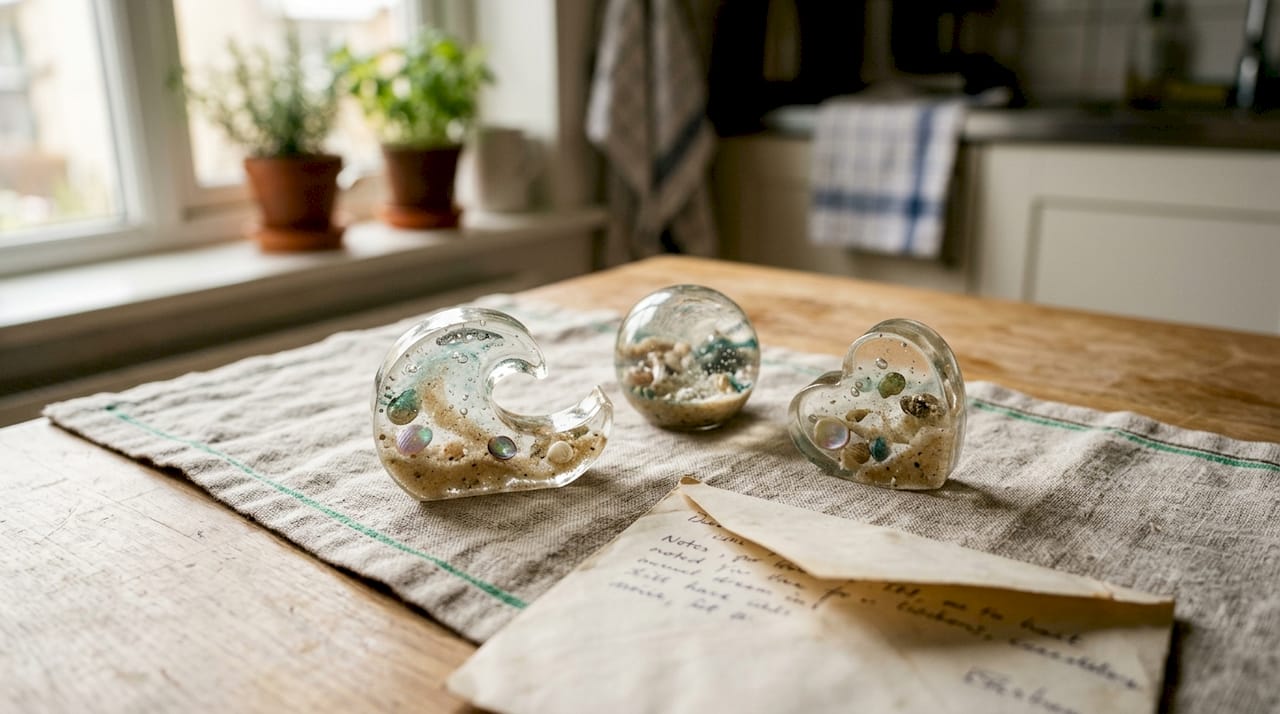
Pro Tip: Ask your charter captain to collect a small vial of sand or a shell from the scattering site before the ceremony ends. That material can be sent to the artisan studio alongside the ashes for a keepsake tied directly to the exact location.
The sea funeral symbolism embedded in wave-shaped glass or deep-blue resin paperweights also gives these objects a conversational presence in the home. Guests notice them, ask about them, and create space for stories. That ongoing function is something a standard urn rarely achieves. For a look at how emotional glasswork memorials connect grief and artistry, the craft tradition runs deep across cultures.
Keepsake jewelry and miniature urns: Sharing memories, staying connected
Not every family member wants a display piece. Some people want to carry their loved one with them every day. That’s where keepsake jewelry and miniature urns come in.
These items hold a very small amount of ashes, typically in a sealed chamber, and are designed for personal use rather than home display. As noted in guidance from Cremation Art Glass, families often divide the main ashes for sea scattering while retaining small portions for individual jewelry or mini urns, allowing multiple relatives to each have something personal.
Common options include:
- Pendants and lockets: Sterling silver or gold-filled pendants with a small sealed compartment for ashes.
- Bracelets: Beaded or chain styles with a charm urn attachment.
- Cylinder mini urns: Small display urns ranging from 4 to 12 cubic inches, ideal for a nightstand or bookshelf.
- Thumb print keepsakes: Jewelry cast from a fingerprint impression combined with ash infusion.
Here’s a quick comparison of wearable versus display mini keepsakes:
| Feature | Keepsake jewelry | Mini display urn |
|---|---|---|
| Portability | High | Low |
| Ash capacity | Very small (pinch) | 4 to 12 cu in |
| Personalization | Moderate to high | Moderate |
| Best for | Daily connection | Home remembrance |
| Group discounts | Up to 20% for sets | Varies by vendor |
For guidance on dividing ashes respectfully among family members, keepsake urn guidance offers practical steps. Explore personalized maritime keepsakes for ocean-specific designs, or browse elegant sea memorials for premium options that balance beauty and function.
Ceremonial keepsakes: GPS certificates, pouches, and eco urns
Some families aren’t focused on a physical object to keep at home. They want something that honors the ceremony itself, a record of where and when their loved one’s ashes entered the sea.
Sea service providers typically offer these ceremony-focused keepsakes:
- GPS coordinate certificates: Official documents listing the precise latitude and longitude of the scattering, along with the date, name, and sometimes a photograph from the ceremony.
- Keepsake pouches: Small fabric or decorative pouches containing a certificate, a pinch of sand, or a pressed flower from the ceremony.
- Biodegradable salt urns: Used during the ceremony itself, these urns dissolve in about 4 hours when placed in water, making them ideal for a visible, graceful release.
As documented by Sea Services, GPS certificates and pouches are standard offerings from professional sea scattering companies, and they serve as a lasting geographic record of the farewell.
“Knowing the exact coordinates where ashes were scattered gives families a place to return to, even if only in memory or on a map.”
The limitation of ceremony-focused keepsakes is that they don’t contain ashes and don’t serve as a physical connection to the person. They’re best paired with a permanent keepsake like glass art or jewelry for families who want both a record and a tangible memorial. Sustainable sea ceremonies often combine eco urns with GPS certificates for a complete, environmentally responsible farewell.
Comparing memorial keepsake options: What best fits your family’s needs?
With several categories on the table, a direct comparison helps clarify which direction fits your family’s situation.
| Keepsake type | Permanence | Personalization | Eco-friendly | Best for |
|---|---|---|---|---|
| Glass or resin art | High | Very high | Moderate | Display, home tribute |
| Keepsake jewelry | High | High | Moderate | Daily wear, sharing |
| Mini display urn | High | Moderate | Varies | Home remembrance |
| GPS certificate | Permanent record | Low | High | Location memory |
| Biodegradable urn | Ceremony only | Low | Very high | Eco-focused families |
As noted by Sea Services, the choice between permanent ash-infused art and ceremony-focused eco urns often comes down to whether the family prioritizes ongoing physical connection or environmental values.
Here’s a quick guide based on your situation:
- Large family with multiple members: Choose keepsake jewelry sets with group discounts, plus one central glass art piece.
- Eco-conscious family: Pair a biodegradable urn for the ceremony with a GPS certificate for the record.
- Small family, intimate ceremony: A single artisan glass piece with embedded site sand covers both display and emotional needs.
- Family spread across locations: Mini urns or pendants allow each person to have their own keepsake regardless of geography.
For a broader look at eco-friendly memorials, the options have expanded significantly in recent years, making it easier to honor both your loved one and the ocean.
A perspective: Why hyper-personal keepsakes matter more than standard tokens
Most families default to whatever the funeral home has in stock. A plain cylinder urn, a generic pendant, a printed certificate. These items fulfill a function, but they rarely become the objects that families reach for during grief.
What we’ve seen again and again is that the keepsakes families treasure most are the ones that couldn’t have been made for anyone else. A resin wave containing sand from the exact cove where ashes were scattered. A pendant shaped like a compass because the person loved sailing. A glass paperweight in the precise shade of blue from a favorite stretch of coastline.
The craft behind hyper-personalized resin keepsakes is more involved than it looks. Hand-layered resin cures 24 hours per layer to build realistic wave depth, and embedding personal items like a one-inch seashell or sand from the scattering site requires skill and patience. That process is what separates a meaningful object from a product.
Standard tokens get stored in drawers. Artisan keepsakes get placed on mantels, carried in pockets, and shown to grandchildren. If you want the memorial to keep doing its work years from now, invest in something that carries the specific story of your loved one. Personalized at-sea memorials make that level of detail achievable without requiring you to manage the craft process yourself.
Find memorial keepsakes and sea ceremony services
When you’re ready to move from planning to action, Maritime Burials brings everything together in one place.
You can browse keepsake jewelry designed specifically for families who want to carry a loved one close, or explore the full range of biodegradable urns for eco-conscious ceremonies. For something that combines daily comfort with memorial purpose, the healing keepsake bracelets offer a wearable, heart-centered option that many families find deeply comforting. Every product is curated to complement a sea ceremony, so nothing feels out of place with the maritime setting you’ve chosen.
Frequently asked questions
How much ash is needed for glass or resin keepsakes?
Only 0.5 to 2 teaspoons of ashes are needed for most glass or resin memorial keepsakes, making it easy to create multiple pieces from one set of remains.
Do at-sea ceremony keepsakes require EPA or special legal permissions?
Keepsakes kept at home or worn as jewelry don’t require special EPA permissions. Only ocean scattering requires reporting and permit compliance.
Can keepsake items be personalized with location sand or shells?
Yes, many artisan studios allow you to embed site sand or shells from the scattering location directly into the keepsake for deeper, location-specific meaning.
What is the typical timeline for receiving a glass or resin memorial keepsake?
Most glass and resin keepsakes are crafted in 2 to 6 weeks after the studio receives your order and the ash portion.
Is it possible to divide ashes for several keepsake items within a family?
Yes, families regularly reserve small portions for individual jewelry or mini urns while scattering the main ashes at sea, allowing each family member to have a personal token.
Recommended
- Ocean farewell: guide to eco-friendly at-sea memorials – Maritime Burials at Sea - Nationwide Service Provider
- Honor cremated remains with personalized at-sea memorials – Maritime Burials at Sea - Nationwide Service Provider
- Symbolism in sea funerals: traditions and eco options – Maritime Burials at Sea - Nationwide Service Provider
- Honoring Loved Ones with Serenity: The Benefits of Renting a Yacht Cha – Maritime Burials at Sea - Nationwide Service Provider
- Custom Map Jewelry - Personalized Necklaces & Pendants
