

Sea burial etiquette: complete step-by-step guide
TL;DR:
- Sea burials are regulated by EPA rules requiring a minimum distance of 3 nautical miles from land.
- Proper preparation uses natural, biodegradable materials to honor the environment and adhere to etiquette.
- Thoughtful personal touches and respectful practices create meaningful at-sea farewells beyond regulatory compliance.
Honoring a loved one at sea is one of the most profound farewell gestures a family can offer, yet most people walk into the planning process with more questions than answers. What are the rules? What is appropriate to say or do? How far offshore must the vessel travel? These uncertainties can weigh heavily on an already grieving family. This guide cuts through the confusion and walks you through every stage of sea burial etiquette, from the foundational regulations to the personal touches that make a ceremony truly unforgettable. By the end, you will know exactly what to do, in what order, and why it matters.
Table of Contents
- Understanding sea burial regulations and etiquette
- Essential preparation: Materials, permissions, and notifications
- Step-by-step ceremony process and etiquette at sea
- Honoring traditions and adding meaningful touches
- A personal perspective on sea burial etiquette
- Plan your sea burial with trusted support
- Frequently asked questions
Key Takeaways
| Point | Details |
|---|---|
| Follow legal requirements | Conduct all sea burials at least three nautical miles from shore and notify the EPA within 30 days. |
| Prepare with care | Use permitted, biodegradable materials and secure all permissions before your ceremony. |
| Honor with etiquette | Respect traditions and personal touches while maintaining dignity and environmental stewardship. |
| Personalize meaningfully | Incorporate readings, flowers, and keepsakes for a ceremony as unique as your loved one. |
Understanding sea burial regulations and etiquette
Before you can plan a meaningful ceremony, you need to understand the rules that govern it. Burial at sea for ocean waters is governed by the EPA’s Marine Protection, Research, and Sanctuaries Act (MPRSA) general permit, covering both full-body and cremated remains. This is the legal backbone of any civilian sea burial in the United States, and it shapes every etiquette decision you will make.
There is also an important distinction families often miss. A civilian private ceremony and a military burial at sea are two entirely separate programs. The U.S. Navy conducts military burials while ships are actively deployed, meaning families generally cannot attend. If your loved one is a veteran and you want family present, a civilian ceremony through a licensed provider is the path that makes that possible. Understanding this distinction early prevents grief compounded by logistical disappointment.
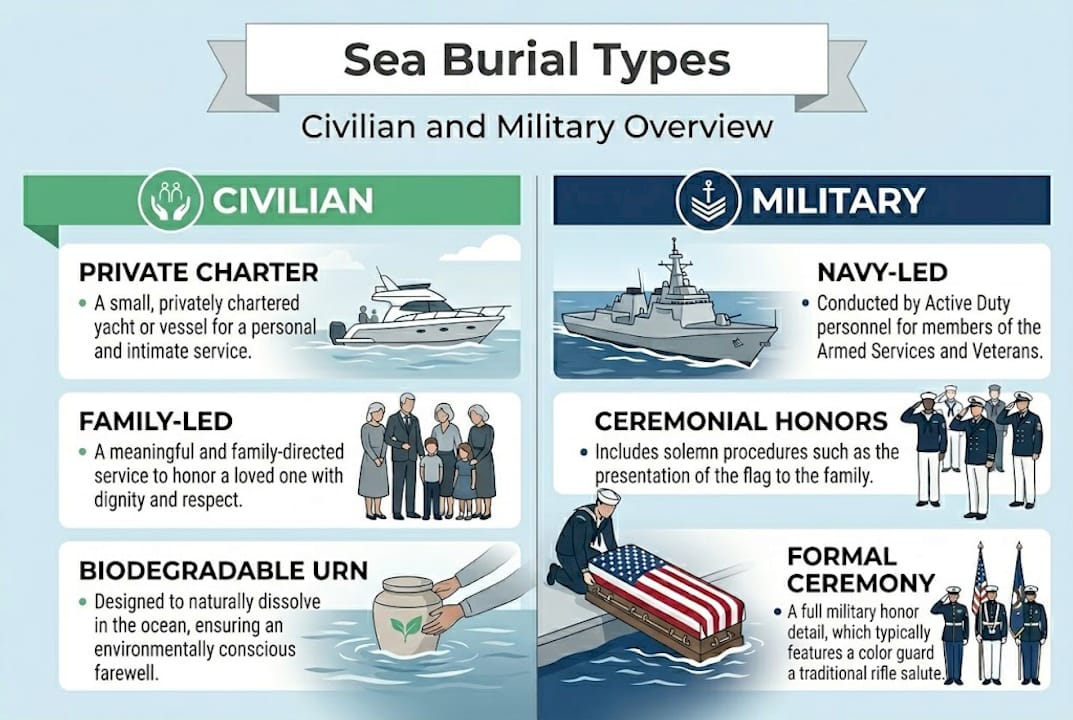
On the etiquette side, the core principle is simple: respect the regulations as an act of respect for the maritime environment and for your loved one’s memory. Treating the ocean as sacred space, not just a backdrop, changes how everyone on board carries themselves during the ceremony.
Here is a quick comparison of what each type of burial involves:
| Factor | Cremated remains | Full-body (non-cremated) remains |
|---|---|---|
| Minimum distance from shore | 3 nautical miles | 3 nautical miles |
| Depth requirement | None | At least 600 feet |
| EPA notification required | Yes, within 30 days | Yes, within 30 days |
| Family attendance (civilian) | Permitted | Permitted |
| Family attendance (military) | Not permitted | Not permitted |
For the ceremony structure itself, etiquette calls for a clear order of events so guests know what to expect. A few principles to keep in mind:
- Designate a ceremony leader, such as a captain, officiant, or family member, before you depart.
- Brief all guests on the order of the ceremony before boarding.
- Silence phones and ask guests to remain respectful throughout the committal moment.
- Allow time for quiet reflection after the scattering or lowering, before moving into any social gathering.
For a broader look at ceremony structure, the burials at sea guide and an overview of types of sea ceremonies can help you decide which format suits your family best.
“The ocean does not care about our schedules or emotions. Approaching it with reverence, not convenience, is the first act of etiquette.”
Essential preparation: Materials, permissions, and notifications
Once you understand the rules and etiquette, the next step is ensuring everything is prepared and permitted before you leave the dock. This is where many families encounter unnecessary stress, simply because they did not start early enough.
Vessel selection matters more than most people realize. The boat must be seaworthy, large enough for your guest count, and ideally captained by someone experienced with ceremonial voyages. A professional charter removes most of the logistical burden from grieving families.
For the remains themselves, the EPA outlines specific guidance for preparation. When it comes to shroud wrapping and casket prep, the EPA recommends removing all plastic from caskets and using only natural materials. This is both an environmental requirement and an etiquette standard. Releasing synthetic materials into the ocean contradicts the spirit of a ceremony meant to honor both a life and the natural world.

For urns, choose biodegradable options made from natural materials. Many families also find that reviewing sustainable burial tips helps them make choices that align with their values and legal responsibilities.
Here is a preparation checklist with key materials and their purpose:
| Item | Purpose | Etiquette note |
|---|---|---|
| Biodegradable urn or shroud | Holds or wraps remains | No plastics or synthetic materials |
| Natural flowers | Tribute offering | Must be plastic-free |
| EPA permit documentation | Proof of compliance | Keep onboard during ceremony |
| Guest list and ceremony program | Keeps event organized | Distribute before boarding |
| Captain’s log or record | Documents burial location | Required for EPA notification |
The administrative steps, in order, look like this:
- Confirm vessel availability and book your charter.
- Select and prepare remains per EPA material guidelines.
- Review and confirm your EPA MPRSA general permit coverage.
- Prepare documentation of burial coordinates, date, and time for post-burial notification.
- Notify the EPA within 30 days after the ceremony, as EPA notification within 30 days is required under the MPRSA general permit.
For a thorough review of legal requirements by state, the sea scattering laws resource is worth reviewing before you finalize any plans.
Pro Tip: Start your material preparation at least two weeks before the ceremony. Last-minute sourcing of biodegradable urns or natural shrouds can be difficult, and rushing this step adds unnecessary pressure to an already emotional time.
Step-by-step ceremony process and etiquette at sea
With preparation complete, it is time to conduct the ceremony with care and attention to both tradition and regulation. A well-run ceremony feels seamless, which only happens when everyone on board knows what comes next.
Before departing, run through this pre-departure checklist:
- Confirm weather is safe and seas are calm enough for all guests.
- Brief guests on safety procedures, seasickness precautions, and ceremony order.
- Verify all materials, including urns, flowers, and printed readings, are on board.
- Confirm GPS coordinates for your intended scattering or committal site.
- Ensure the captain has all required documentation on board.
Once underway, here is the step-by-step ceremony sequence:
- Board and settle. Allow guests to board calmly and find their positions. The captain or officiant should welcome everyone and set the tone.
- Travel to the site. The vessel travels to the designated location. Burials must take place at least three nautical miles from land, with full-body burials requiring a minimum depth of 600 feet.
- Opening words. The officiant or a family member delivers an opening reflection or prayer. Keep it brief but sincere.
- Readings and tributes. Guests may share readings, poems, or personal words. Assign speakers in advance to maintain flow.
- The committal. This is the heart of the ceremony. The urn is lowered, ashes are scattered, or the casket is committed to the sea. Flowers can be placed on the water as a final tribute.
- Moment of silence. Allow at least one full minute of quiet after the committal. This is the most important etiquette moment of the entire ceremony.
- Closing words and departure. The officiant closes the ceremony. The captain logs the GPS coordinates, time, and date before the vessel returns to shore.
For families scattering cremated remains, the scattering ashes at sea guide covers practical details that complement these steps. If you want help structuring the emotional arc of the ceremony itself, planning a dignified ash scattering offers thoughtful frameworks.
Pro Tip: Assign one family member as a quiet coordinator on the day. Their only job is to gently guide guests through each step so the ceremony leader can focus entirely on the tribute.
Honoring traditions and adding meaningful touches
After the ceremony steps are in place, consider how to layer in personal and meaningful touches that stay within both etiquette guidelines and environmental standards. This is where a ceremony stops feeling like a procedure and starts feeling like a real tribute.
Traditional elements that work beautifully at sea include spoken readings from favorite books or poems, a period of shared silence, soft instrumental music played on a portable speaker, and the scattering of natural flower petals alongside the remains. Each of these has deep roots in maritime memorial tradition.
The EPA emphasizes removing plastics and using natural materials to avoid marine debris, which means your personalization choices also double as environmental stewardship. Choosing a wreath of real blooms over a plastic floral arrangement is not just a regulatory requirement. It is also a more beautiful and honest tribute.
For ideas on arrangements that work specifically at sea, the flower arrangement ideas for sea burials resource covers options that are both striking and eco-conscious.
Here is a list of meaningful, etiquette-respecting additions to consider:
- Natural flower petals scattered on the water after the committal
- A printed ceremony program so guests can follow along and take a keepsake home
- A short playlist of the deceased’s favorite songs, played softly before and after the committal
- A bell or chime rung three times as a traditional maritime farewell
- Biodegradable lanterns released on the water where local regulations permit
- Memorial bracelets given to guests as a lasting keepsake
- A handwritten letter from the family, read aloud and then placed in the urn before committal
Keepsakes matter beyond the ceremony itself. They give guests something tangible to carry with them, which supports grief in the weeks and months that follow. For broader inspiration, personalized sea memorial services offers ideas for making the ceremony feel uniquely suited to the person being honored.
Balancing personalization with formal etiquette is not difficult when you use a simple rule: if it is natural, respectful, and leaves no trace, it belongs at a sea burial.
A personal perspective on sea burial etiquette
Most conversations about sea burial etiquette focus almost entirely on regulations, and for good reason. Compliance matters. But in our experience working alongside grieving families, the most powerful moments never come from following a checklist. They come from the small, intentional acts that sit just beyond the requirements.
Removing plastics from a casket is the law. Choosing a wreath of real gardenias because they were her favorite flower is love. Reading the EPA notification timeline is responsible planning. Spending ten extra minutes at sea after the committal because the family needs more time is wisdom.
Conventional thinking treats etiquette as a set of rules to survive. We think of it differently. Etiquette at a meaningful farewell at sea is the architecture of memory. Every deliberate choice, from the silence you hold to the flowers you place, becomes the story families tell later. The regulations give you the structure. The etiquette gives you the dignity. What you bring emotionally gives the ceremony its meaning.
Plan your sea burial with trusted support
Planning a sea burial while grieving is a lot to carry. Maritime Burials is here to make the process smoother, more dignified, and deeply personal.
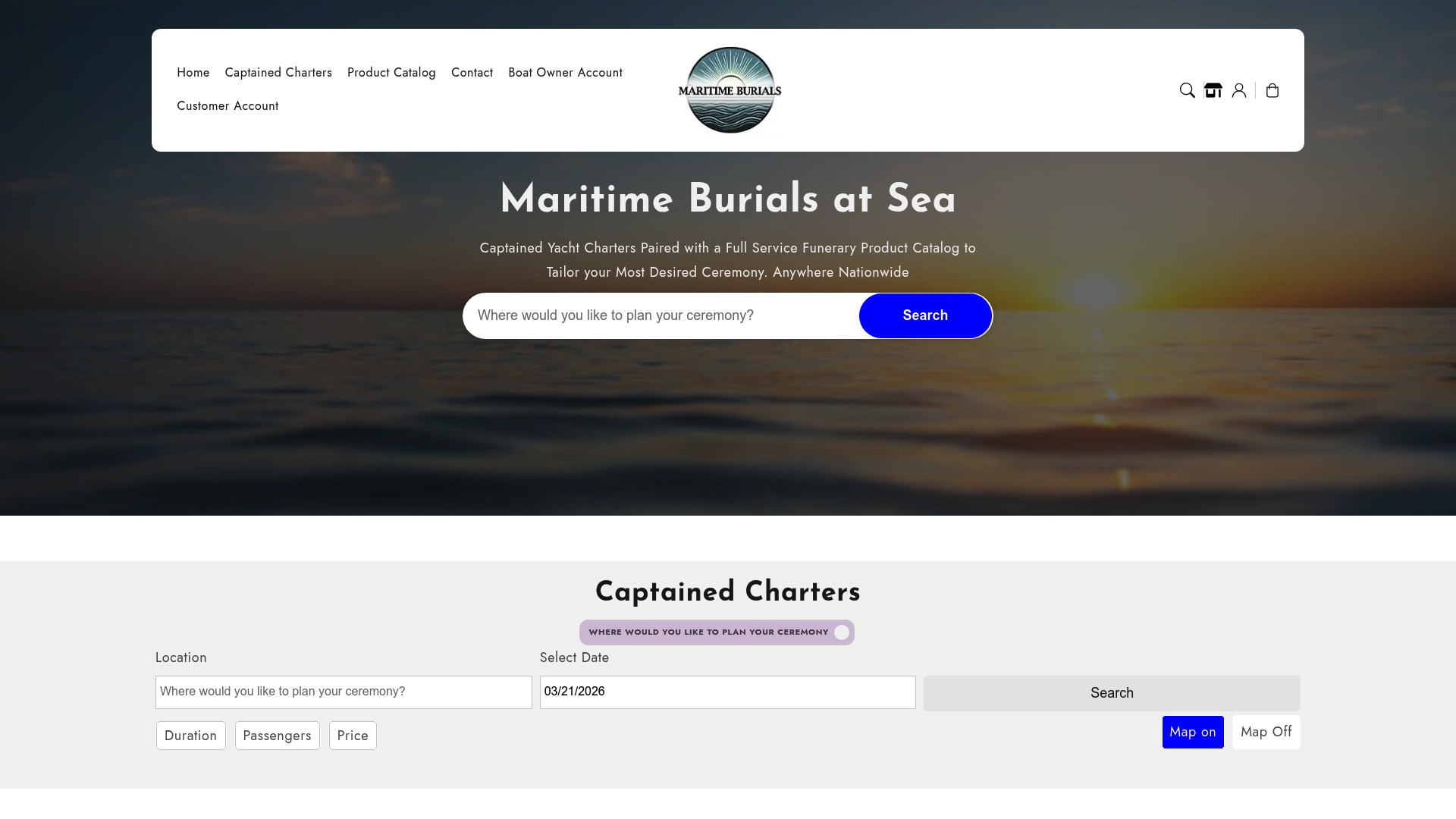
From chartering a Bertram yacht built for private ceremonies to selecting biodegradable urns that meet EPA standards, every detail is covered in one place. Browse funeral flower options that are naturally beautiful and environmentally responsible, or explore the full range of memorial keepsakes designed to give guests something lasting to hold. Maritime Burials at Sea pairs captain-led yacht charters with a curated selection of ceremony products, so your family can focus on honoring your loved one rather than managing logistics.
Frequently asked questions
What is the minimum distance from shore required for a sea burial?
In the U.S., burials must occur at least three nautical miles from land, whether you are scattering cremated remains or committing a full body to sea.
Do I need to notify any authority after a sea burial?
Yes. The EPA requires notification within 30 days of the burial, including details such as the date, GPS coordinates, and type of remains.
What materials are recommended for preparing a body or urn for sea burial?
The EPA advises using natural materials only, such as natural fiber shrouds and caskets free of plastics, to prevent marine debris and stay in compliance.
Can families attend military burials at sea?
No. U.S. Navy sea burials for veterans take place while ships are actively deployed, so families are not permitted to be present at the ceremony.
Recommended
- Step-by-step guide to sustainable burial at sea – Maritime Burials at Sea - Nationwide Service Provider
- Eco-Friendly Burial at Sea Guide: Honor Loved Ones – Maritime Burials at Sea - Nationwide Service Provider
- Ocean burials guide: personalized maritime farewells – Maritime Burials at Sea - Nationwide Service Provider
- Types of at-sea ceremonies for meaningful farewells – Maritime Burials at Sea - Nationwide Service Provider
