

Explore At-Sea Remembrance Options for Meaningful Farewells
TL;DR:
- At-sea remembrance includes diverse ceremonies such as scattering, full-body burials, and reef tributes.
- Legal requirements involve EPA regulations, biodegradable materials, and post-ceremony reporting.
- Personalization options range from vessel choice and music to keepsakes, creating deeply meaningful farewells.
Many families assume a burial at sea means someone stands at the railing, tips over an urn, and heads back to the dock. That picture couldn’t be further from today’s reality. At-sea remembrance has grown into one of the most personalized, emotionally resonant farewell experiences available in the United States, blending natural beauty with deeply customized ceremony. From luxury yacht charters and curated keepsakes to living reef tributes and biodegradable floral arrangements, the ocean offers a setting that simply cannot be replicated on land. This guide walks you through ceremony types, legal requirements, and the many ways to create a tribute as unique as the person you’re honoring.
Table of Contents
- Understanding at-sea remembrance: More than just a farewell
- Key ceremony types: Scattering, full-body, and alternative memorials
- Legal essentials and compliance requirements
- Personalizing your at-sea remembrance experience
- What most families miss when choosing at-sea remembrance options
- Transforming remembrance: Luxury options with Maritime Burials at Sea
- Frequently asked questions
Key Takeaways
| Point | Details |
|---|---|
| Multiple ceremony formats | At-sea remembrance offers ash scattering, full-body, and creative alternatives to fit different wishes. |
| Strict regulations apply | EPA and state laws govern location, depth, materials, and reporting for all sea tributes. |
| Personalization is possible | Luxury vessels, keepsakes, music, and floral tributes can help tailor an experience to honor your loved one. |
| Support is available | Professional maritime services can simplify planning, logistics, and compliance for a stress-free tribute. |
Understanding at-sea remembrance: More than just a farewell
At-sea remembrance refers to any memorial ceremony or interment that takes place on open water, and it covers far more ground than most people realize. The phrase includes ash scattering, full-body burials, reef tributes, and even live-streamed unattended ceremonies for families spread across the country. What unites them all is the use of the ocean as a sacred, natural resting place that many find more comforting than a cemetery plot.
Families choose these ceremonies for very different reasons. Some are drawn to the ecological benefits: ashes and biodegradable materials return to the natural cycle of the ocean without leaving a permanent footprint. Others choose the sea because their loved one had a deep connection to water, whether through sailing, fishing, or simply loving the coast. Veterans, in particular, often request maritime send-offs as a final nod to their service.
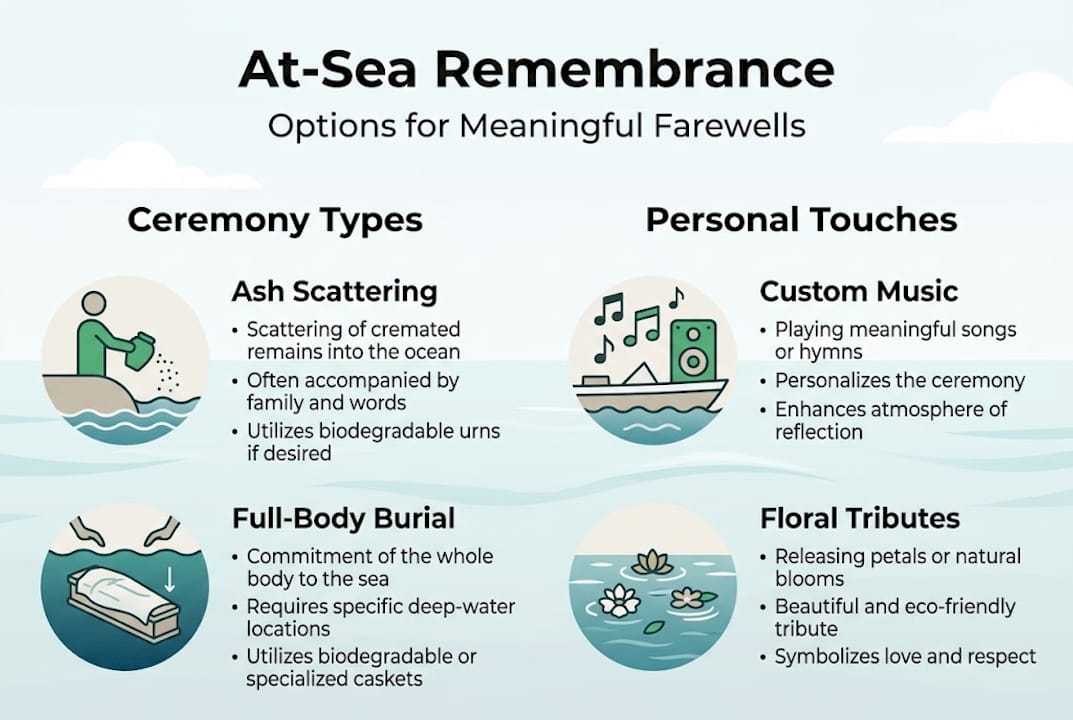
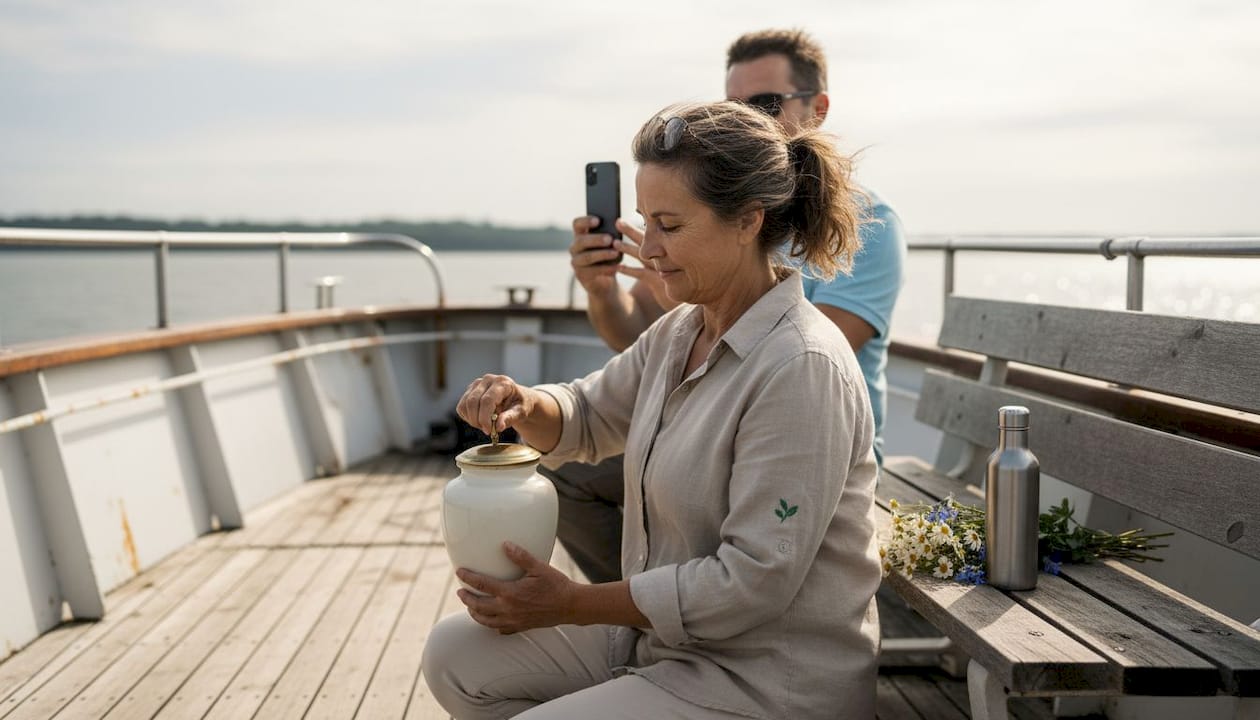
The range of guests and ceremony styles is equally wide. You can organize an intimate private gathering of immediate family, a larger celebration of life with dozens of guests, or even a completely unattended scattering arranged through a trusted captain. Each option serves a different emotional and logistical need.
Here’s a quick look at the most common formats:
- Attended ash scattering: Family and friends gather on a vessel to say goodbye together
- Unattended scattering: A captain and crew scatter remains on your behalf, often with photos or video documentation
- Full-body burial: A less common but deeply meaningful option for those who prefer traditional interment
- Reef or artifact tributes: Remains are incorporated into reef structures that grow into living habitats
- Live-streamed hybrid ceremonies: Family members participate remotely in real time
According to EPA burial guidelines, scattering is more eco-friendly and transient while reefs are permanent and habitat-building, and full-body burial is rarer with deeper placement requirements and more restrictions. These distinctions matter when you’re deciding what feels right for your family.
The appeal of meaningful farewells at sea continues to grow across the country, driven by a cultural shift toward experiences that feel intentional rather than generic. If you want the full picture of available approaches, our ocean burials guide covers the landscape in detail.
Key ceremony types: Scattering, full-body, and alternative memorials
Not all at-sea ceremonies are created equal, and understanding the differences helps you make a choice that genuinely fits your family’s values and your loved one’s wishes.
Ash scattering is by far the most popular format. It’s accessible, relatively affordable, and endlessly customizable. You can scatter remains from a luxury yacht with a string quartet playing, or in a quiet moment on a smaller charter with just a few family members present. The remains return to the ocean naturally, leaving no permanent marker, which many families find freeing rather than sad.
Full-body burial is the rarest option and comes with strict requirements. EPA regulations mandate that full-body interments happen at least 3 nautical miles from land, at a minimum depth of 600 feet, and in certain Florida coastal zones, that depth increases to 1,800 feet. Cremated remains can be scattered at any depth beyond the 3-mile limit. All materials must be biodegradable.
Reef and artifact tributes sit in a fascinating middle ground. Cremated remains can be mixed into concrete structures that are then placed on the ocean floor, where they slowly become part of a living reef ecosystem. This option costs more than a standard scattering, but it offers something scattering cannot: a permanent, findable location families can return to, often by boat or even scuba.
Here’s a side-by-side comparison of the main ceremony types:
| Ceremony type | Cost level | Permanence | Environmental impact | Guest access |
|---|---|---|---|---|
| Ash scattering | Lower | None (transient) | Minimal, eco-friendly | Easy, any size |
| Full-body burial | Higher | Permanent | Regulated, deeper water | Captain-led only |
| Reef tribute | Moderate to high | Permanent habitat | Positive, habitat-building | Limited dive access |
| Keepsake/jewelry | Varies | Permanent keepsake | Minimal | Family keeps remains |
A numbered breakdown of how to approach your ceremony decision:
- Clarify whether you want a permanent resting place or a release
- Decide how many guests will attend, or whether attended service is needed
- Review the types of at-sea ceremonies available in your region
- Consider whether keepsakes or personalized cremated remains tributes will supplement the ceremony
- Confirm logistics with a licensed captain familiar with EPA compliance
Pro Tip: If you’re leaning toward a reef tribute, ask providers whether the reef site is cataloged and whether your family can receive coordinates for future visits. Many families find that having a specific location to return to provides unexpected long-term comfort.
Legal essentials and compliance requirements
One of the most common concerns families bring to us is whether they’ll run into legal complications. The good news is that the framework is relatively straightforward once you understand the core rules.
The U.S. Environmental Protection Agency governs ocean burials under the Marine Protection, Research, and Sanctuaries Act. The key rules are practical, not burdensome:
- 3-nautical-mile minimum: All burials must happen at least 3 miles from the nearest shoreline
- Depth requirements: Cremated remains may be scattered at any depth past the 3-mile mark; full-body requires 600 feet minimum (1,800 feet in certain Florida zones)
- Biodegradable materials only: Flowers, wreaths, and any items placed in the water must be fully biodegradable; no plastics or synthetic materials allowed
- No prior permit required: You do not need government approval before the ceremony
- Post-event reporting: A report must be filed with the EPA within 30 days of the burial
The EPA post-burial reporting requirement covers the date, location coordinates, type of material, and the vessel used. Your maritime service provider typically handles this paperwork on your behalf, so it rarely falls to the family.
State-specific rules add a layer of nuance. Florida, for example, has stricter depth requirements in certain coastal zones due to existing reef ecosystems. Inland waterways are almost always off-limits under federal rules, though some states have their own regulations for river or lake scattering. Always confirm with your service provider that the planned location meets both federal and state standards.
Weather is a practical legal issue too. If conditions on the scheduled day are unsafe, the ceremony must be postponed. Most reputable providers build flexible rescheduling into their agreements to protect families from losing deposits due to weather.
For more information on how regulations for ocean burials apply to your specific location and ceremony type, we recommend reviewing our detailed compliance resource.
Pro Tip: Always ask your captain or service provider to confirm they will file the EPA post-event report on your behalf. This is standard practice among reputable operators, and confirming it upfront removes one more task from your plate during an already emotional time.
Personalizing your at-sea remembrance experience
This is where at-sea remembrance truly separates itself from any other farewell format. The ocean is a setting, not a script. Everything that happens within that setting is yours to shape.
Vessel choice alone transforms the tone of the ceremony. A luxury yacht with a private deck, catered service, and a sound system creates a celebration of life atmosphere. A smaller, quieter vessel creates intimacy. Some families specifically request that the boat anchor at a location their loved one cherished, whether that’s a favorite fishing spot or a bay they sailed through together.
Personalization elements families most often add include:
- Custom music playlists or live musicians performing meaningful songs
- Personalized readings from family members, poems, or religious texts
- Floral tributes using biodegradable flowers that float and eventually dissolve
- Keepsake items like cremation jewelry, healing bracelets, or small memorial urns so each family member takes something home
- Custom flags or banners representing the person’s heritage, branch of service, or favorite colors
- Catered food and drink to celebrate the life rather than mourn it
According to EPA ceremony guidance, attended ceremonies tend to be more emotionally impactful while unattended options are simpler and more affordable, giving families genuine flexibility based on their needs and budget.
“The ceremony doesn’t have to look like anything you’ve seen before. The only rule is that it has to feel like them.”
Accessibility matters too. If elderly guests or family members with mobility challenges are attending, vessel selection should factor in boarding ease, deck space, and restroom access. Experienced providers account for these details without being asked.
For inspiration, explore our resources on yacht memorial service planning, ideas for at-sea memorials, and luxury funeral options that families have used to create deeply personal tributes.
Pro Tip: Assign a trusted family member or friend the role of ceremony coordinator on the day of the event. That person handles timing cues, manages guest seating, and coordinates with the captain so the family can stay fully present in the moment.
What most families miss when choosing at-sea remembrance options
Most families approach at-sea remembrance by focusing on logistics: which boat, which date, how many people. That focus is understandable, and logistics matter. But in our experience, the elements that bring the most lasting comfort are almost never the ones families spent the most time planning.
A piece of music playing as the ashes enter the water. A captain who gives the family space but stays close. A wreath that floats just long enough for everyone to watch it drift away. These small, carefully chosen details are what people remember years later, not the size of the yacht.
Families also consistently underestimate how much emotional weight the ceremony day carries. Having an experienced facilitator on board, someone who understands both the practical and emotional rhythms of a memorial service, is not a luxury. It’s a necessity. That experience lets the family fully participate instead of quietly managing details.
Cultural preferences and accessibility needs are often addressed too late in the planning process. If you want to incorporate specific traditions or rituals, raise them early. The best providers adapt. Explore unique memorial ideas that honor cultural heritage alongside the maritime setting.
Personalization and emotional support are not extras. They are the entire point.
Transforming remembrance: Luxury options with Maritime Burials at Sea
When you’re ready to move from planning to creating, Maritime Burials brings everything together in one place.
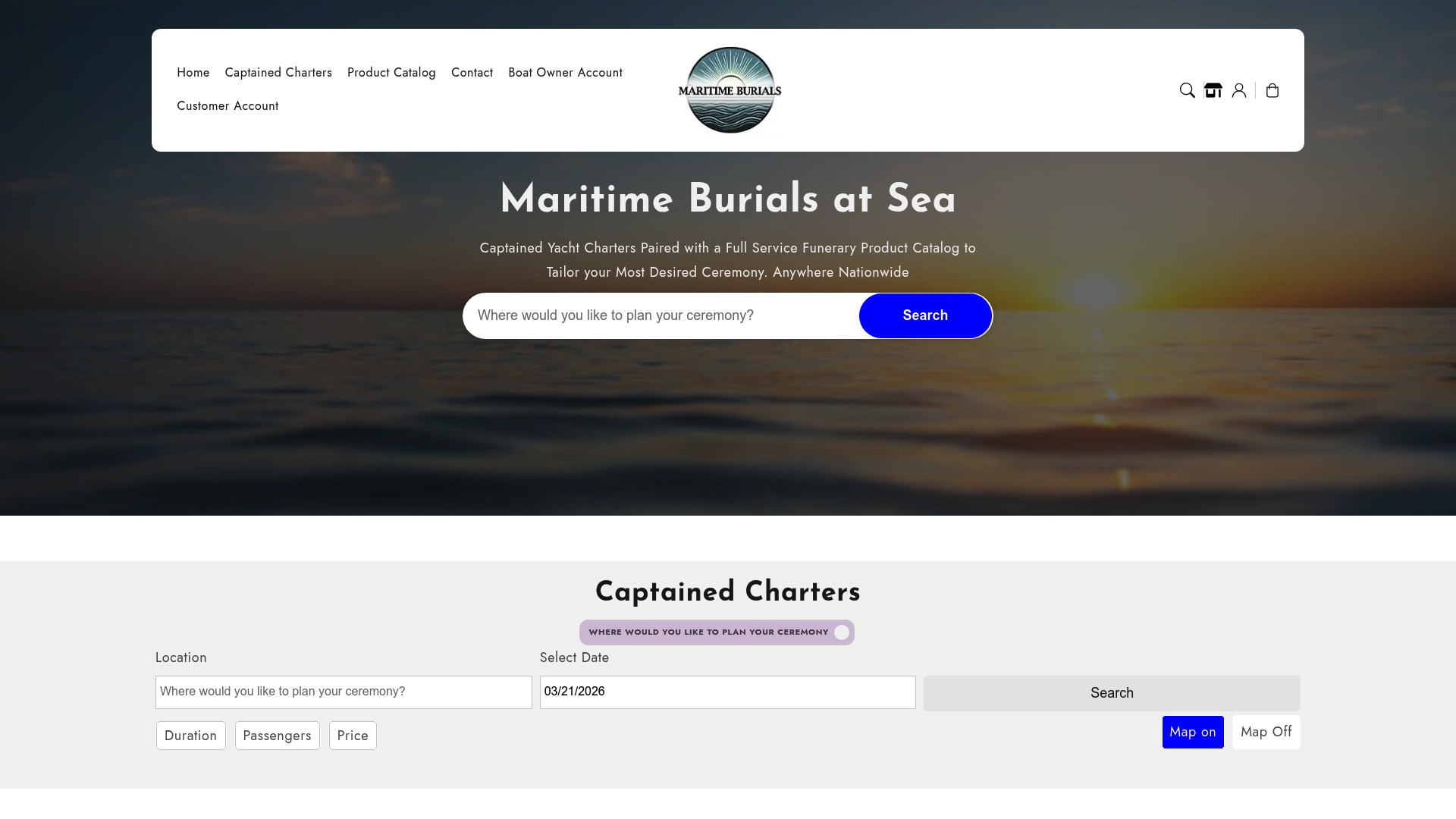
Whether you’re drawn to the elegance of a semi-custom Bertram yacht accommodating up to 49 guests or looking for a more intimate charter, our platform connects you with experienced captains across the country. Browse our curated selection of biodegradable urns, keepsakes, and floral tributes to complete the ceremony. Every detail, from vessel selection to EPA compliance reporting, is handled with care so your family can focus entirely on honoring your loved one. Explore all nationwide service options and begin planning a farewell that truly reflects the life you’re celebrating.
Frequently asked questions
What are the main types of at-sea remembrance ceremonies?
The main options include ash scattering, full-body burials, and alternative tributes like memorial reefs or keepsake artifacts. EPA guidelines classify scattering as eco-friendly and transient, reefs as permanent and habitat-building, and full-body burial as the most regulated format.
What legal steps must families take for a sea burial in the U.S.?
Sea burials must follow EPA rules including a 3-nautical-mile minimum from shore, specific depth requirements for full-body interments, biodegradable materials only, and a post-event report submitted within 30 days. No prior permit is required.
Can we personalize luxury at-sea tribute ceremonies?
Yes, families can tailor everything from the vessel and music to readings and take-home keepsakes for a deeply personal experience. Vessel size, catering, ceremony structure, and memorial products are all customizable.
Is it possible to hold an unattended or virtual sea memorial?
Many providers offer unattended and live-streamed options so you can honor loved ones even if traveling to the water isn’t possible. Unattended services are typically more affordable and often include photo or video documentation from the captain.
Are veterans eligible for special at-sea burial options?
Yes, eligible veterans may receive at-sea burial services through the Navy or Coast Guard, often at no cost to the family. Private maritime services can also be arranged alongside or separate from military honors for a more personalized tribute.
Recommended
- Ocean farewell: guide to eco-friendly at-sea memorials – Maritime Burials at Sea - Nationwide Service Provider
- Why memorialize at sea? Eco-friendly and meaningful farewells – Maritime Burials at Sea - Nationwide Service Provider
- Types of at-sea ceremonies for meaningful farewells – Maritime Burials at Sea - Nationwide Service Provider
- Planning personalized at-sea memorial services: yacht guide – Maritime Burials at Sea - Nationwide Service Provider
