

How to plan a dignified ash scattering ceremony at sea
Planning an ash scattering ceremony at sea presents unique emotional and logistical challenges for families seeking a meaningful farewell. While US cremation rates continue rising, more families are choosing ocean memorials that offer dignity and connection to nature. This guide walks you through selecting licensed luxury yachts, navigating federal regulations, and personalizing your ceremony to honor your loved one with the respect they deserve. From permit requirements to environmental considerations, you’ll discover how professional yacht charters transform complex planning into a seamless, memorable experience.
Table of Contents
- Key takeaways
- Preparing for your ash scattering ceremony at sea
- Executing the ash scattering ceremony on a luxury yacht
- Ensuring a dignified and environmentally responsible memorial
- Common challenges and tips for a smooth ash scattering service
- Explore luxury yacht options for your sea memorial
- Frequently asked questions about ash scattering at sea
Key Takeaways
| Point | Details |
|---|---|
| Rising cremation rates | Cremation rates are rising, driving more families to pursue ocean memorials. |
| USCG licensed yachts | Choosing a USCG licensed luxury yacht provides legal compliance and a dignified setting for the ceremony. |
| Environmental impact negligible | Ash scattering has negligible environmental impact because remains are largely mineral and disperse safely in ocean waters. |
| Personalized ceremony touches | Music, readings, and floral tributes personalize the ceremony and create meaningful memories. |
| Professional planning support | Charter professionals manage permits and scheduling to ensure a smooth and respectful execution. |
Preparing for your ash scattering ceremony at sea
Successful ocean memorials begin with thorough preparation addressing legal requirements, vessel selection, and logistical coordination. Understanding federal and state regulations prevents delays and ensures your ceremony proceeds smoothly.
The Environmental Protection Agency mandates ash scattering occur at least three nautical miles from shore in ocean waters. Certain states impose additional restrictions on inland waterways or coastal zones, requiring specific permits beyond federal guidelines. Professional yacht charter services typically navigate these requirements, but families should confirm all necessary documentation weeks before the scheduled ceremony.
Selecting a U.S. Coast Guard-licensed luxury yacht provides both legal compliance and dignified surroundings for your memorial. Prioritize USCG-licensed luxury yachts with captains handling EPA paperwork and GPS certificates documenting the exact scattering coordinates. These vessels range from intimate 40-foot models accommodating 12 guests to spacious options like the semi-custom Bertram motor yacht hosting up to 49 passengers. Consider your guest list size, desired amenities, and budget when selecting your vessel.
Key preparation steps include:
- Confirm yacht licensing and captain credentials with the charter operator
- Request detailed information about onboard facilities, climate control, and accessibility features
- Verify the vessel’s insurance coverage and safety equipment certifications
- Discuss catering options, audio systems, and decoration possibilities with the crew
- Establish clear communication channels for weather updates and schedule adjustments
Pro Tip: Schedule your ceremony during calmer sea conditions, typically morning hours or late spring through early fall months. Captains can recommend optimal times based on local weather patterns and tidal conditions.
| Preparation Element | Timeline | Responsible Party |
|---|---|---|
| Initial yacht booking | 4-6 weeks prior | Family |
| EPA permit filing | 3-4 weeks prior | Charter service |
| State permit acquisition | 2-3 weeks prior | Charter service |
| Guest notifications | 2-3 weeks prior | Family |
| Final headcount confirmation | 1 week prior | Family |
| Ceremony details finalization | 3-5 days prior | Family and captain |
Location selection extends beyond regulatory compliance. Choose scattering sites with personal significance when possible, such as favorite fishing grounds, coastal areas near your loved one’s home, or waters they enjoyed during life. Licensed captains maintain knowledge of local regulations and can suggest meaningful locations that meet all legal requirements while honoring your family’s preferences.
Executing the ash scattering ceremony on a luxury yacht
The ceremony itself requires coordination between family wishes, crew expertise, and environmental considerations. Proper execution ensures a respectful, memorable experience for all participants.
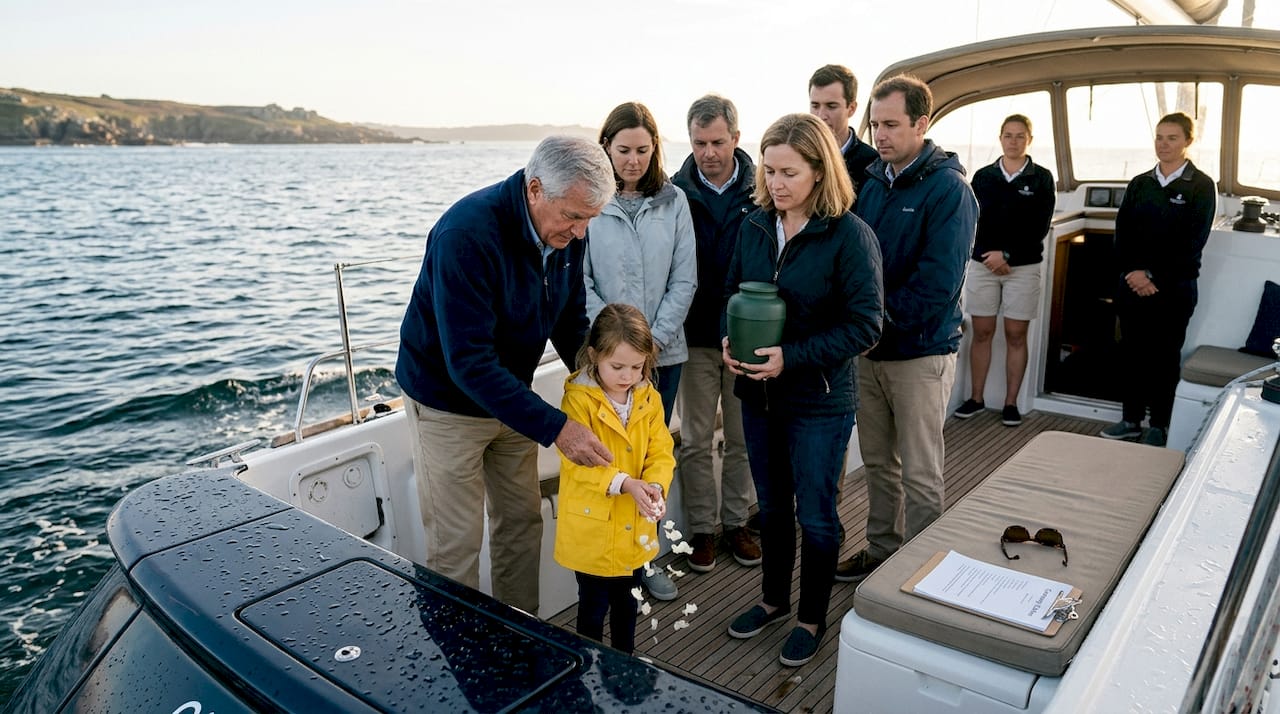
Begin by establishing clear communication with the yacht captain and crew about your ceremony timeline and specific wishes. Professional crews experienced in memorial services understand the emotional nature of these events and can guide families through the process with sensitivity. Luxury yacht charters provide options for personalized rituals such as music selections, readings, and floral tributes that create meaningful experiences.
Follow this sequence for a smooth ceremony:
- Gather all guests in the designated ceremony area as the yacht reaches the scattering location
- Captain announces arrival at the coordinates and confirms readiness to proceed
- Officiant or family member delivers opening words, readings, or prayers as desired
- Crew assists with ash distribution using appropriate containers and techniques to prevent wind interference
- Family members release tribute sprays for memorials or biodegradable flowers into the water
- Guests observe a moment of silence or share memories and reflections
- Captain records GPS coordinates and prepares official certification documentation
- Ceremony concludes with closing words and time for private reflection
Ash distribution requires attention to wind direction and vessel positioning. Experienced captains position the yacht to ensure ashes scatter properly without blowing back onto the deck or guests. Crew members provide specialized containers or assist families in releasing remains at the optimal moment when conditions align perfectly.
Personalization transforms standard procedures into deeply meaningful tributes. Consider these elements:
- Live or recorded music reflecting your loved one’s preferences
- Poetry readings, religious texts, or personal letters shared aloud
- Biodegradable flower petals, wreaths, or natural materials released with the ashes
- Photography or videography services to document the ceremony respectfully
- Guest participation through shared memories, toasts, or symbolic gestures
Pro Tip: Prepare a detailed ceremony outline sharing it with the captain and key family members beforehand. This ensures everyone understands their role and timing, reducing stress during the emotional event.
Guest preparation matters significantly. Communicate ceremony expectations, appropriate attire for maritime conditions, and any mobility considerations for boarding and moving around the vessel. Luxury yachts like the San Diego luxury yacht offer stable platforms with safety features, but guests should understand basic maritime etiquette and safety protocols before departure.
Ensuring a dignified and environmentally responsible memorial
Maintaining dignity while respecting marine ecosystems requires understanding cremains composition and following established environmental guidelines. Families can feel confident that properly conducted ocean scattering poses minimal ecological impact.
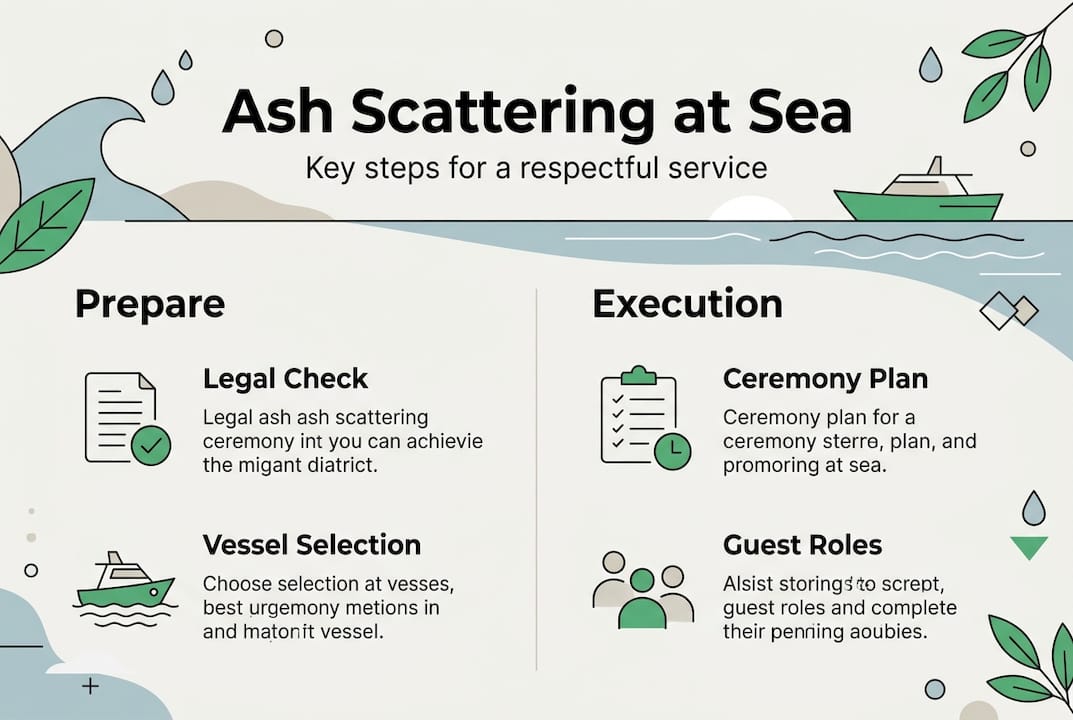
Cremains scattering has negligible environmental impact as ashes consist mainly of natural minerals including calcium phosphates, potassium, and sodium salts. These compounds occur naturally in ocean water and marine sediments, integrating harmlessly into the ecosystem. Unlike burials involving caskets or vaults, ocean scattering introduces no synthetic materials or preservatives into the environment.
Comparing ceremony approaches helps families choose the most meaningful option:
| Ceremony Type | Personalization | Guest Participation | Privacy | Environmental Control |
|---|---|---|---|---|
| Private yacht charter | Highly customizable | All guests present and involved | Complete privacy | Full control over location and materials |
| Commercial scattering service | Limited options | Family not typically present | Shared with other families | Standard procedures only |
| DIY from shore | Moderate flexibility | Small groups only | Public areas | Limited to accessible locations |
Private luxury yacht ceremonies provide superior dignity and personalization compared to mass scattering services where ashes from multiple families mix together without individual recognition or family presence.
Environmental responsibility extends beyond ash composition. Follow these practices:
- Use only biodegradable materials for flowers, wreaths, and ceremonial items
- Avoid plastic containers, synthetic ribbons, or non-degradable decorations
- Select natural flower varieties rather than treated or dyed blooms
- Remove all packaging and non-organic materials before releasing tributes
- Confirm scattering location avoids marine sanctuaries, wildlife preserves, or restricted zones
Vessels like the Hatteras luxury yacht options operate with environmental consciousness, ensuring ceremonies comply with all EPA guidelines while minimizing any ecological footprint. Captains maintain current knowledge of protected marine areas and seasonal restrictions affecting specific coastal regions.
As one family shared after their ceremony:
“Knowing that Mom’s ashes returned to the ocean she loved, without harming the marine life she cherished, brought us profound peace. The luxury yacht setting honored her memory with the dignity she deserved while respecting the environment she worked to protect.”
Maintaining ceremony atmosphere requires clear protocols shared with all participants. Establish expectations for respectful behavior, appropriate photography boundaries, and moments designated for quiet reflection versus shared memories. Professional yacht crews facilitate these elements naturally, guiding families through emotional moments with practiced sensitivity.
Common challenges and tips for a smooth ash scattering service
Even well-planned ceremonies encounter obstacles. Anticipating common challenges and implementing proven solutions ensures your memorial proceeds as smoothly as possible despite unexpected complications.
Weather represents the most frequent challenge for ocean ceremonies. Coastal conditions change rapidly, and safety always takes precedence over schedule adherence. Build flexibility into your planning by selecting a date range rather than a single fixed day, allowing the captain to choose optimal conditions within your window. Most reputable charter services offer rescheduling policies for weather-related delays without additional fees.
Permit acquisition timelines vary by jurisdiction and season. Professional services charge $200 to $1000 and manage permits and certification, minimizing family burden during an already difficult time. Starting the permit process four to six weeks before your desired ceremony date provides adequate buffer for processing delays or additional documentation requests.
Common planning pitfalls to avoid:
- Underestimating guest transportation needs to and from the marina
- Failing to communicate dress code appropriate for maritime conditions
- Neglecting to arrange post-ceremony gathering spaces for continued remembrance
- Overlooking dietary restrictions when planning onboard catering
- Assuming all guests have maritime experience or comfort on boats
Communication clarity prevents misunderstandings and ensures smooth coordination. Provide guests with detailed information packets including marina location, parking instructions, boarding time, expected duration, recommended attire, and any items they should bring. Share the ceremony outline so participants understand their role and the overall flow of events.
Pro Tip: Designate a family member or close friend as the primary coordinator who interfaces with the yacht crew, manages guest questions, and handles day-of logistics. This allows immediate family to focus on emotional processing rather than operational details.
Emotional preparation deserves equal attention to logistical planning. Ocean memorials evoke powerful feelings, and some guests may struggle with seasickness or anxiety about being on the water. Consider these supportive measures:
- Provide seasickness remedies and recommend guests take preventive medication if prone to motion sensitivity
- Create quiet spaces on the vessel where individuals can step away if overwhelmed
- Arrange for a grief counselor or spiritual advisor to attend if desired
- Offer keepsake urn charm options allowing guests to take home a tangible memorial
- Plan a post-ceremony reception where guests can process emotions and share memories in a comfortable setting
Technical aspects like GPS certification and official documentation require attention but shouldn’t burden families. Licensed yacht operators handle these requirements as standard practice, providing families with official certificates recording the exact coordinates, date, and time of ash scattering. These documents offer lasting records and may be required for legal or administrative purposes.
Explore luxury yacht options for your sea memorial
Planning a dignified ash scattering ceremony requires expertise, attention to detail, and vessels equipped to honor your loved one properly. Maritime burials services connect families with licensed luxury yacht charters across popular U.S. coastal locations, ensuring your memorial combines legal compliance with personalized elegance.
Professional crews manage all regulatory paperwork, permit acquisition, and GPS certification while you focus on honoring your loved one’s memory. From intimate gatherings on smaller vessels to larger celebrations aboard options like the San Diego luxury yacht charter, you’ll find the perfect setting for your unique ceremony. Enhance your memorial with thoughtful touches including floral tributes, memorial keepsake bracelets, and biodegradable urns that reflect your loved one’s personality and values. Explore available yachts and memorial products designed specifically for dignified sea burials.
Frequently asked questions about ash scattering at sea
How far from shore must ashes be scattered legally?
Federal EPA regulations require ash scattering at least three nautical miles from the coastline in ocean waters. Some states impose additional restrictions on inland waterways, bays, or specific coastal zones, so verify both federal and state requirements for your chosen location. Licensed yacht operators maintain current knowledge of all applicable regulations and ensure compliance.
What paperwork and permits are required for ash scattering at sea?
Families must file notification with the EPA within 30 days after scattering, including the deceased’s name, date and location of scattering, and name of the person performing the ceremony. Some states require advance permits or additional documentation. Professional yacht charter services typically handle all permit acquisition and filing as part of their memorial packages, eliminating administrative burden during your time of grief.
What personalization options are available on luxury yacht charters?
Luxury yacht ceremonies offer extensive customization including music selections, religious or secular readings, floral tributes, biodegradable wreaths, photography services, and catering options. Families can incorporate personal items, display photo memorials, and structure the ceremony timeline to reflect their loved one’s personality and values. Experienced crews work with families to create meaningful, unique tributes that honor individual preferences.
Are there environmental concerns with scattering ashes in the ocean?
Cremated remains consist primarily of natural minerals that integrate harmlessly into marine ecosystems, causing negligible environmental impact. The key environmental consideration involves ensuring all accompanying materials like flowers, containers, and decorative items are fully biodegradable. Avoid scattering in marine sanctuaries, wildlife preserves, or other protected areas, and follow EPA guidelines regarding distance from shore and proper notification procedures.
How should I involve family and guests respectfully during the ceremony?
Communicate ceremony expectations clearly beforehand, including appropriate attire, boarding procedures, and the general timeline. Offer opportunities for guests to participate through readings, music selections, or sharing memories, but respect that some may prefer to observe quietly. Designate a coordinator to manage logistics so immediate family can focus on emotional processing. Consider providing small keepsakes or memorial items guests can take home as lasting remembrances of the ceremony.
Recommended
- Maritime Burials at Sea – Maritime Burials at Sea
- Healing Keepsake Urn Bracelet for Ashes - Multiple Colors – Maritime Burials at Sea
- 60’ Hatteras Luxury Yacht located in San Diego Bay – Maritime Burials at Sea
- Lava Stone Healing Bracelet for Fur or Ash - Just Beads – Maritime Burials at Sea
- Funeral Photography Oahu | Respectful Event Coverage
