

Marine memorials: a guide to luxurious farewells at sea
TL;DR:
- Marine memorials are personalized sea ceremonies open to all families, regardless of nautical background.
- Federal regulations require scattering at least 3 nautical miles offshore using biodegradable materials.
- These ceremonies provide a meaningful, open environment that enhances healing and farewell reflection.
Many families assume that a burial at sea is reserved for Navy veterans or those who spent their lives on the water. That belief couldn’t be further from the truth. Marine memorials have grown into one of the most personal, moving farewell options available to any family, regardless of background or connection to the ocean. From private yacht charters carrying up to 49 guests to quiet, unattended scatterings at sunrise, these ceremonies offer something that a graveside service rarely can: the kind of open, boundless setting that matches the size of a life well lived.
Table of Contents
- What is a marine memorial?
- How marine memorials work: Step-by-step journey
- Legal requirements and environmental considerations
- Costs, logistics, and service options for families
- A new wave of remembrance: What most people miss about marine memorials
- Create a meaningful farewell at sea with Maritime Burials
- Frequently asked questions
Key Takeaways
| Point | Details |
|---|---|
| Personalized ocean farewells | Marine memorials offer families custom and luxurious remembrance options at sea. |
| Easy compliance | Following EPA rules on distance, materials, and notifications keeps your ceremony legal and eco-friendly. |
| Flexible attendance | Choose whether to attend the ceremony in person or have professionals conduct it on your behalf. |
| Clear costs and choices | Families can select from a range of service tiers and vessel types to fit preferences and budgets. |
| Nationwide availability | Luxury marine memorials can be arranged on most US coasts with experienced providers. |
What is a marine memorial?
A marine memorial is an at-sea ceremony where family and friends gather to honor a loved one and release their remains into the ocean. It is not a military tradition alone. It is not reserved for those who lived near the coast. It is simply a different, profoundly meaningful way to say goodbye, one shaped entirely around the person being honored.
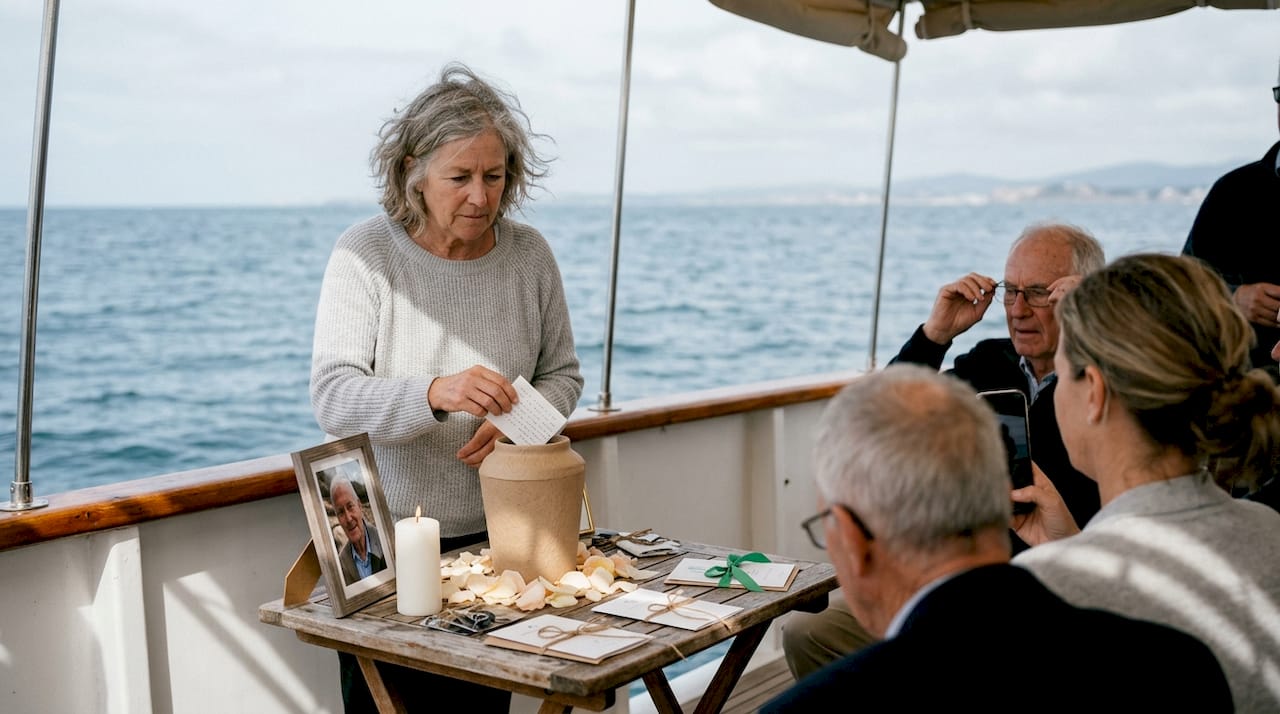
What sets marine memorials apart from a traditional funeral is the level of customization available. Families can choose onboard readings, live or recorded music, rose petal releases, and marine memorial traditions that carry cultural or personal significance. Biodegradable urns dissolve gently into the water. Loved ones can speak, cry, laugh, and breathe ocean air while processing grief in real time.
There are two primary service types:
- Attended services: Family and friends board a private charter yacht, typically accommodating 10 to 50 guests. The ceremony is personalized with readings, music, and symbolic gestures like scattering rose petals alongside the ashes.
- Unattended services: A professional captain and crew conduct the scattering on behalf of the family, often chosen when travel or logistics make attendance difficult.
According to EPA marine memorial guidelines, vessels must travel at least 3 nautical miles offshore before releasing remains. Ceremony traditions often include ringing the ship’s bell eight times, a practice rooted in maritime culture. GPS coordinates are recorded and provided to the family, and the EPA is notified within 30 days of the service.
“The ocean has no walls, no ceiling, and no end in sight. For many families, that openness becomes the most healing part of the entire ceremony.”
Many families are surprised to discover why families choose ocean memorials over traditional services. The answer often comes down to one thing: presence. Standing on moving water, surrounded by sky and sea, transforms a farewell into something unforgettable.
How marine memorials work: Step-by-step journey
Now that you know what a marine memorial is, let’s walk through exactly how these ceremonies are conducted at sea.
Understanding the sequence of a marine memorial helps families feel prepared rather than overwhelmed. Here is a typical flow from start to finish:
- Book your service. Choose between an attended or unattended ceremony, select your vessel, confirm your guest count, and coordinate ceremonial add-ons like flowers, music, or urns.
- Prepare documentation. Your provider will handle EPA reporting, but you may need to supply the death certificate and cremation paperwork ahead of the date.
- Board the vessel. On the day of the ceremony, guests gather at the departure port. Captains brief everyone on safety, and the vessel departs from the coastal dock.
- Travel offshore. The yacht sails a minimum of 3+ nautical miles from shore before the ceremony begins, per EPA regulations.
- Conduct the ceremony. Eulogies, readings, music, and symbolic releases take place at sea. The ship’s bell may be rung. Rose petals follow the ashes into the water.
- Receive GPS coordinates. After the ceremony, families receive the exact location where their loved one was released. This becomes a place they can return to in spirit.
- EPA notification. Your provider files the required report within 30 days of the service.
| Feature | Attended service | Unattended service |
|---|---|---|
| Family present | Yes, up to 50 guests | No |
| Ceremony elements | Full: music, readings, flowers | Basic: professional scattering |
| GPS coordinates | Provided | Provided |
| Cost range | $900 to $4,500 | $350 and up |
| Best for | Families seeking closure together | Remote families or simpler wishes |
For guidance on planning an ash scattering ceremony that fits your family’s vision, thinking ahead about timing matters enormously.
Pro Tip: Schedule morning departures between late spring and early fall. Seas are typically calmer before noon, making the experience more comfortable for guests of all ages, especially those who may be prone to motion sickness.
For families wanting a fully personalized maritime farewell, attended services offer the widest range of meaningful touches.
Legal requirements and environmental considerations
As you consider planning a marine memorial, it’s crucial to understand the legal and environmental requirements that keep these ceremonies respectful and lawful.
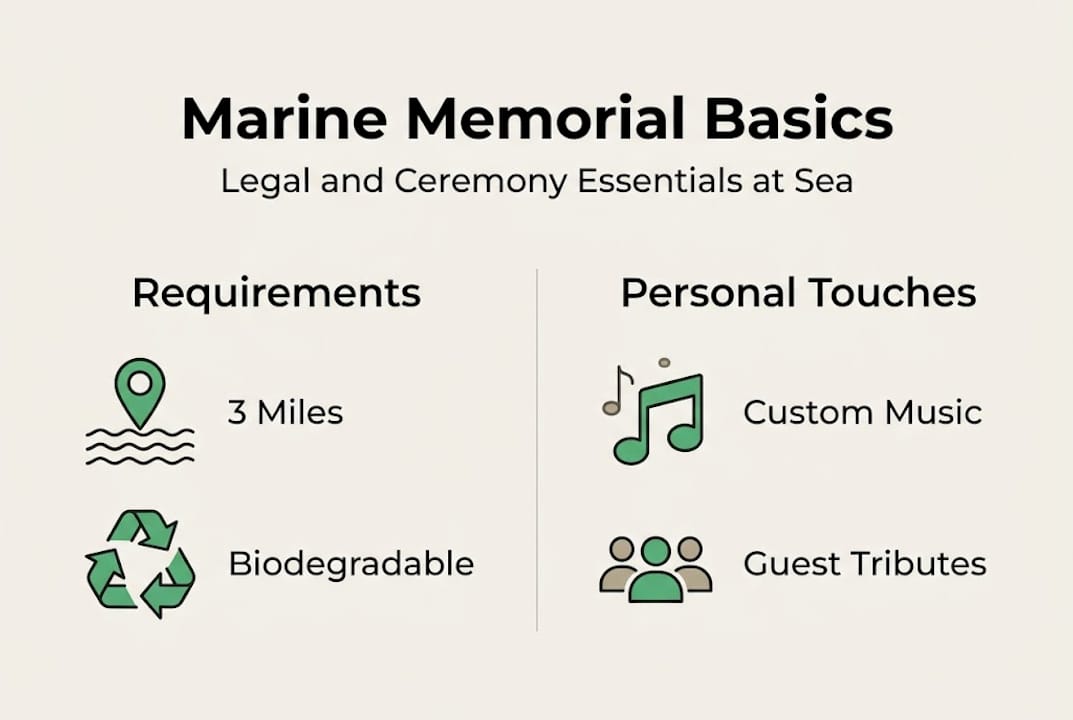
The EPA governs burial at sea under the Marine Protection, Research, and Sanctuaries Act (MPRSA). These rules exist to protect ocean ecosystems while still allowing families to hold meaningful ceremonies. Understanding them upfront prevents surprises.
Here is a summary of the core requirements:
| Requirement | Cremated remains | Full body burial |
|---|---|---|
| Minimum distance from shore | 3 nautical miles | 3 nautical miles |
| Minimum depth | Any depth | 600 feet (1,800 ft in some FL areas) |
| Container type | Biodegradable only | Weighted biodegradable casket or shroud |
| Prior permit needed | No | No |
| EPA report deadline | Within 30 days | Within 30 days |
Cremated remains are by far the most common option. EPA burial rules specify that remains must be placed in biodegradable materials only, with no plastics, metals, or non-decomposable items allowed. Full body burials are rare because of the significant cost, the vessel requirements, and the strict depth minimums.
Prohibited items at a marine memorial include:
- Plastic flowers or decorations
- Metal containers or keepsakes placed in the water
- Non-biodegradable wreaths
- Pet remains (pets have separate regulations)
- Embalmed remains without prior approval
Those interested in eco-friendly green memorials will find that a well-planned marine ceremony is one of the most environmentally responsible farewell options available.
State regulations can add another layer. Coastal states like California and Florida sometimes have stricter rules for nearshore scattering in bays or estuaries. Always verify local rules before selecting your departure port. Families considering a sustainable sea burial should review their state’s marine environmental guidelines in addition to federal EPA rules.
Pro Tip: Work with a licensed marine memorial provider. Experienced companies stay current on both federal and state regulations, handle EPA notification automatically, and ensure that every item used in the ceremony is fully compliant.
Costs, logistics, and service options for families
Finally, understanding the costs, available service upgrades, and what to expect logistically empowers families to select the right type of marine memorial.
Cost is one of the first questions families ask, and it varies based on several factors. Charter costs typically run between $900 and $2,200 for standard attended services, with premium locations like Manhattan reaching up to $4,500. Unattended services start around $350.
What drives the price up or down:
- Yacht size and type: Larger vessels that accommodate more guests come at a higher rate.
- Guest count: More guests often means a longer ceremony window and a larger crew.
- Location: Major metro coastal areas command premium pricing.
- Ceremony elements: Flowers, personalized urns, music equipment, and decorative touches add to the base cost.
- Add-on products: Keepsakes, healing bracelets, and memorial jewelry are optional but meaningful.
For veterans and active military, the Navy burial program offers full body and cremated remains burial at sea at no cost, coordinated through the U.S. Navy. Eligibility extends to veterans, retirees, and their dependents.
The vast majority of modern marine memorials involve cremated remains rather than full body burial, reflecting both the practicality and the preference most families express when exploring their options.
When choosing a provider, look for:
- Licensed captains with documented experience in memorial services
- Clear EPA compliance and reporting processes
- A catalog of luxury burial options including biodegradable urns, flowers, and ceremony products
- Transparent pricing with no hidden fees
- References or testimonials from families they’ve served
The right provider handles the logistics so your family can focus entirely on honoring your loved one. Families seeking personalized luxury funeral options will find that investing in an experienced, full-service provider makes a meaningful difference in the quality of the ceremony.
A new wave of remembrance: What most people miss about marine memorials
Here’s something we’ve observed working with families across the country: the ocean does something to people that a chapel or graveside simply cannot replicate. It shifts your perspective. You’re no longer standing in a fixed, enclosed space. You’re part of something vast and continuous, and that changes how grief moves through the body.
Many families worry that an ocean ceremony will feel less personal than a traditional funeral. The opposite tends to be true. Without walls and pews and formal scripts, people speak more freely. They laugh. They tell the stories that matter. The ceremony becomes a living reflection of the person lost.
The common misstep we see is treating the ocean setting as a backdrop rather than a participant. Families who engage with the environment, who scatter eco-friendly ocean farewells with intention, who let the sound of waves guide moments of silence, those families consistently describe the experience as transformative rather than simply ceremonial.
Our advice: don’t plan a land funeral and move it to a boat. Plan a ceremony that belongs to the sea from the start.
Create a meaningful farewell at sea with Maritime Burials
If you’re ready to honor a loved one with an unforgettable ocean farewell, explore these trusted options for every family’s needs.
Maritime Burials offers captain-led yacht charters, curated ceremony products, and nationwide booking to make planning as seamless as possible during a difficult time.
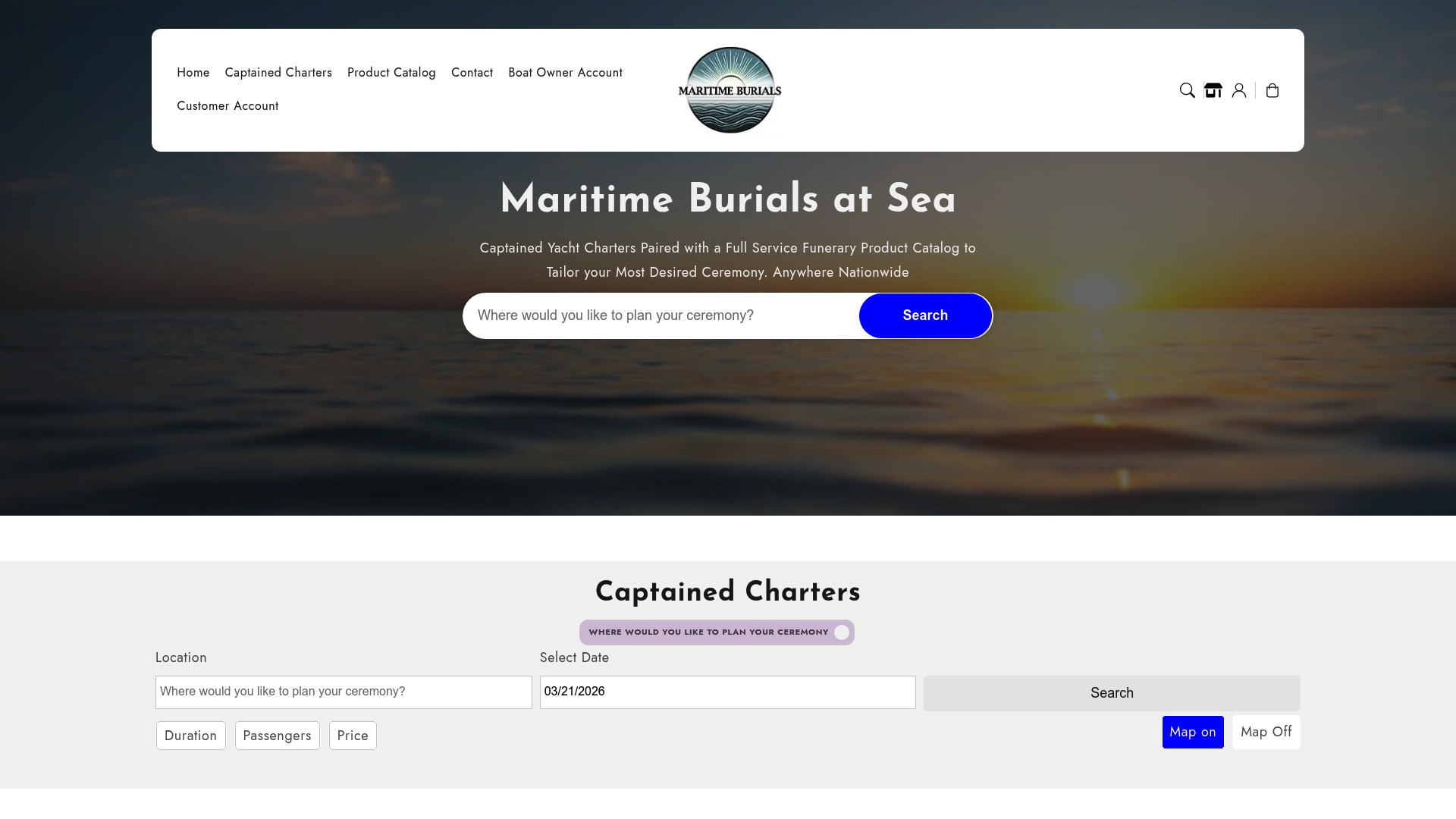
Whether you’re looking for an intimate gathering on a private yacht memorial charter, a selection of thoughtfully designed biodegradable urns that honor both your loved one and the environment, or simply a place to start exploring your options, nationwide marine memorial booking is available through our platform. Every ceremony is built around your family’s wishes, from the vessel to the final keepsake.
Frequently asked questions
Is a marine memorial only for veterans or sailors?
No, marine memorials are open to anyone. Modern services welcome families from all backgrounds, with both attended and unattended options available regardless of military status.
How far out to sea must ashes be scattered by law?
Federal EPA rules require scattering at least 3 nautical miles from shore, using only biodegradable urns or materials that will not harm the marine environment.
Do families receive proof of the ceremony location?
Yes. Providers record and supply GPS coordinates of the exact release location, giving families a permanent, meaningful point of reference.
Can we bring flowers or personal items for the ceremony?
Natural, biodegradable flowers are welcome, but no plastics or metals may be released into the water under EPA regulations.
Are these services available nationwide?
Yes, most providers including Maritime Burials offer coast-to-coast booking and coordination, connecting families with licensed captains in their region.
Recommended
- Ocean farewell: guide to eco-friendly at-sea memorials – Maritime Burials at Sea - Nationwide Service Provider
- Marine memorial traditions: honoring loved ones at sea – Maritime Burials at Sea - Nationwide Service Provider
- Personalized funeral options for luxury burial at sea – Maritime Burials at Sea - Nationwide Service Provider
- Why memorialize at sea? Eco-friendly and meaningful farewells – Maritime Burials at Sea - Nationwide Service Provider
