

How to Organize an Ocean Memorial: Step-by-Step Guide
TL;DR:
- Ocean memorials primarily involve ash scattering at least 3 nautical miles from shore, following EPA rules.
- Planning includes choosing attended or unattended ceremonies, booking licensed captains, and personalizing details.
- Eco-friendly options and luxury touches can be combined to create meaningful, legal, and environmentally responsible farewells.
Planning an ocean memorial is one of the most meaningful decisions a family can make, and also one of the most logistically complex. Between understanding EPA regulations, choosing the right vessel, and personalizing a ceremony that truly reflects your loved one’s spirit, the details can feel overwhelming during an already difficult time. This guide walks you through every critical step, from the moment you begin exploring options to the final farewell on open water. By the end, you will know exactly what to prepare, what to avoid, and how to create a ceremony that offers lasting comfort.
Table of Contents
- What you need to know before organizing an ocean memorial
- Step-by-step planning: From booking to ceremony day
- Eco-friendly choices and luxury touches
- Compliance, logistics, and common pitfalls
- Our perspective: The deeper meaning of ocean memorials
- Plan your ocean memorial with expert guidance
- Frequently asked questions
Key Takeaways
| Point | Details |
|---|---|
| Legal requirements | Memorials at sea must follow EPA regulations, including ash scattering three miles from shore and using only biodegradable materials. |
| Personalization options | You can customize your ceremony with luxury vessels, music, and eco-friendly tributes to reflect your loved one’s spirit. |
| Step-by-step planning | Organize your event successfully by following a clear timeline for booking, compliance, and final details. |
| Eco-friendly focus | Green urns and natural flowers safeguard marine environments while honoring your loved one. |
| Inclusivity matters | Both attended and remote memorial options let all loved ones take part in the ceremony. |
What you need to know before organizing an ocean memorial
Before you book anything or make any calls, it helps to understand what an ocean memorial actually involves. There are two primary forms: scattering cremated ashes at sea and full-body burial. Ocean memorials most commonly involve cremated remains because the process is simpler, more affordable, and easier to coordinate across different U.S. coastlines. Full-body burial requires a federal permit, significant vessel space, and weighted preparation, making it far less common for families.
Understanding this distinction early saves you from confusion when speaking with providers. Most families choose cremation followed by a dedicated ash scattering ceremony, either attended by loved ones or conducted privately by a captain.
Key distinctions between ceremony types:
- Attended ceremony: Family and friends join on a vessel, share readings and music, and participate in scattering together
- Unattended ceremony: A captain performs the scattering privately, then provides families with GPS coordinates and photographs
- Full-body burial: Requires a federal permit and is relatively rare; primarily used for military or specific religious traditions
The ocean memorial benefits reach beyond aesthetics. Research shows that open-water settings promote emotional release and a feeling of continuation, especially for families of those who loved the sea.
From a legal standpoint, the EPA guidelines set clear rules for all U.S. ocean burials. Ashes must be scattered at least 3 nautical miles from shore in ocean waters of any depth. You must notify the EPA within 30 days of the ceremony using their online reporting tool. Only biodegradable materials are allowed overboard, with no plastics or metals permitted.
“The ocean does not separate us from those we love. It carries them forward.”
These rules apply whether you are off the coast of California, Florida, or New York. Ignoring them can result in fines and added stress during an already emotional period. Exploring eco-friendly memorial choices early on helps you align your wishes with what the law actually permits.
| Ceremony type | Typical cost range | Guest capacity | EPA notification required |
|---|---|---|---|
| Unattended scattering | Lower | None | Yes, within 30 days |
| Attended on small vessel | Moderate | Up to 10 | Yes, within 30 days |
| Attended on luxury yacht | Higher | Up to 49 | Yes, within 30 days |
Now that you know what’s possible, let’s explore what you need to set up a respectful ocean memorial.
Step-by-step planning: From booking to ceremony day
Once you’ve considered your options and learned the essentials, organizing the details comes next. A well-timed, structured approach makes the entire experience feel manageable rather than overwhelming.
Planning a maritime memorial follows a reliable sequence:
- Arrange cremation first. The remains need to be prepared before any ceremony can take place. Coordinate with a licensed funeral home early.
- Decide between attended and unattended. This single choice shapes everything from vessel size to the products you’ll need.
- Select a USCG-licensed captain or provider. A U.S. Coast Guard licensed captain is not just a preference, it is a legal necessity for operating a vessel during a burial at sea ceremony.
- Book 4 to 8 weeks in advance. Popular coastal providers fill up quickly, especially during spring and fall. Waiting too long limits your date options significantly.
- Confirm guest count. Vessels range from intimate boats for small gatherings to luxury yachts accommodating up to 49 passengers. Your guest count determines your vessel choice.
- Personalize the ceremony. Choose readings, music playlists, biodegradable flower petals, keepsakes, and any visual elements that reflect your loved one’s personality.
- Check weather forecasts before the day. Wind and wave conditions affect both the safety of the ceremony and the experience of scattering. Have a flexible backup date.
Pro Tip: When researching providers, ask specifically whether their captain holds an active USCG license and whether they carry proper marine insurance. This protects your family legally and ensures the ceremony runs professionally.
| Feature | Attended ceremony | Unattended ceremony |
|---|---|---|
| Family participation | Full | None |
| Personalization options | High | Limited |
| Typical vessel size | Medium to large | Small |
| GPS/photo documentation | Optional | Standard |
| Cost | Higher | Lower |
For deeper inspiration on ceremony design, browsing personalized yacht services can spark ideas you hadn’t considered, from themed decor to custom song selections. You might also explore unique ceremony ideas to give the farewell a truly one-of-a-kind feel.
Eco-friendly choices and luxury touches
Ensuring a unique, elegant memorial at sea often means blending personalization with environmental responsibility. The good news is that these two goals are far more compatible than most families expect.
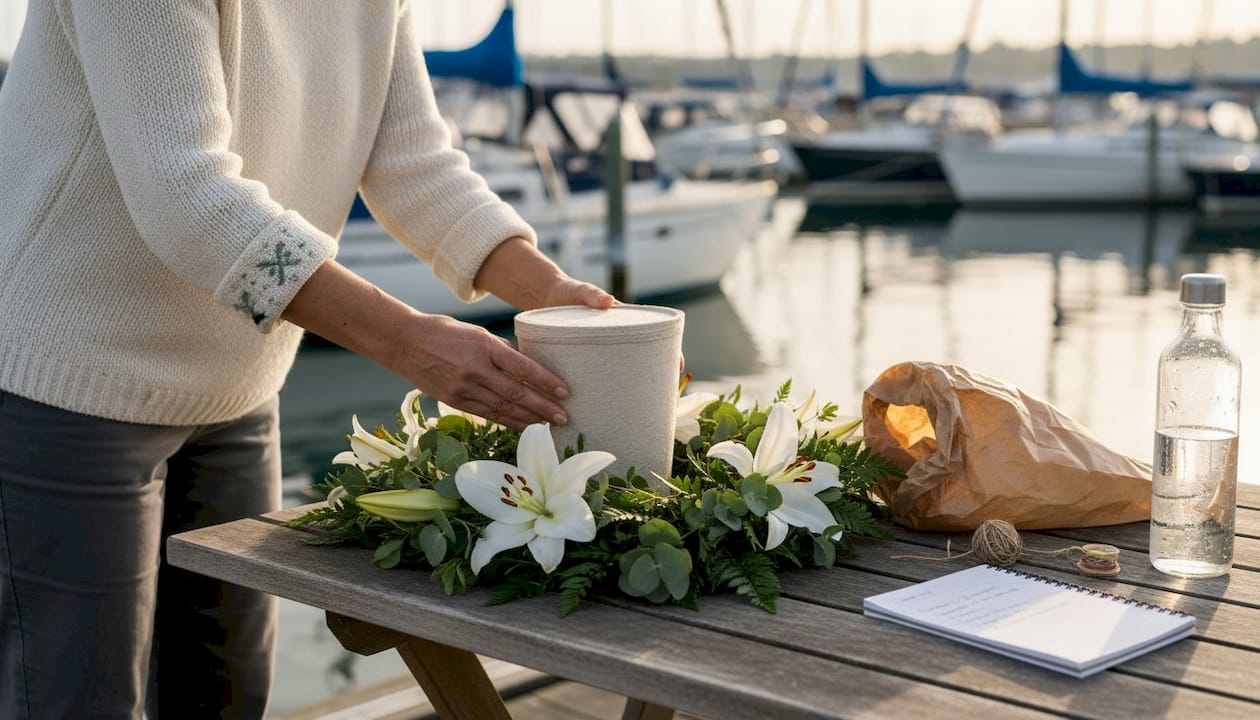
Only biodegradable materials are permitted by the EPA during an ocean burial. This rules out synthetic wreaths, plastic packaging, metal containers, and most commercially available urns that aren’t specifically designed for water burial. But this restriction opens the door to a genuinely beautiful category of products.
Eco-friendly materials that are both legal and meaningful:
- Salt-based or paper biodegradable urns that dissolve naturally in ocean water
- Fresh-cut native flowers or petals free of wire and synthetic dye
- Seed paper memorial cards that guests can plant afterward
- Wooden or bamboo keepsake boxes for families to take home
- Natural beeswax candles for pre-ceremony onshore services
Where the eco-friendly side of planning ends, luxury begins. A luxury options overview reveals how much is possible: professional onboard photography, custom-catered receptions after the ceremony, personalized flower arrangements delivered dockside, and bespoke memorial jewelry crafted from ocean glass or healing stones.
Pro Tip: Order your biodegradable urn and flowers from the same provider if possible. This ensures that all materials meet EPA requirements and simplifies delivery coordination in an already busy planning period.
Luxury and environmental responsibility are not opposites. In fact, many of the most visually stunning memorial products available today are also the most ocean-safe. Bespoke salt urns, for example, are both sculptural and entirely water-soluble. Hand-tied floral arrangements using seasonal blooms outperform plastic-heavy alternatives in both appearance and ecological impact.
For a full overview of what compliant, thoughtful materials look like in practice, the eco-friendly ocean memorial guide covers sourcing, design, and legal verification in one place.
Compliance, logistics, and common pitfalls
Luxury, eco-conscious memorials still require flawless execution. Don’t let preventable mistakes disrupt your plans.
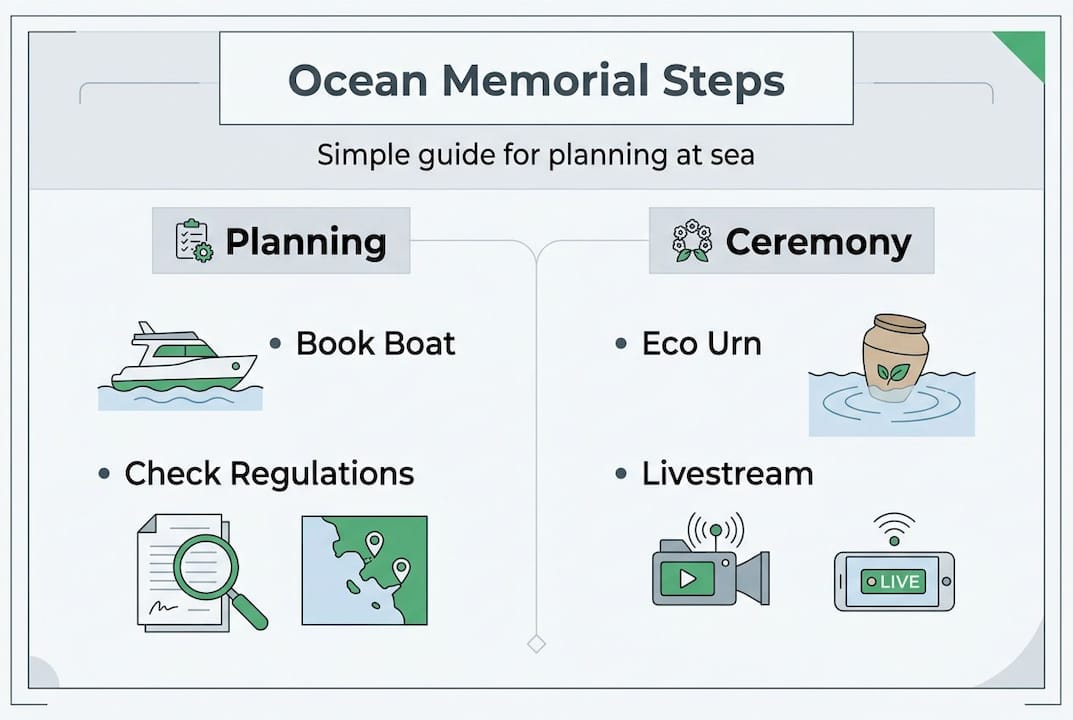
EPA regulations require notification within 30 days of an ocean burial, and restrict a wide range of ineligible materials. Missing this window doesn’t undo the ceremony, but it does create unnecessary legal exposure for the family.
Step-by-step compliance checklist:
- Confirm the scattering location is at least 3 nautical miles from shore before departure
- Verify that all materials brought aboard are biodegradable and EPA-compliant
- Document the GPS coordinates, date, and time of scattering
- Submit your EPA notification online within 30 days of the ceremony
- Keep a copy of the notification confirmation for your records
Common mistakes families make:
- Bringing non-biodegradable urns or synthetic flowers on the vessel
- Forgetting to file the EPA notification after the ceremony
- Underestimating guest count and booking a vessel too small
- Skipping a weather check and arriving to rough seas with no backup plan
The most overlooked mistake: Families often forget that even items tossed overboard as a tribute, like wreaths or memorial cards, must be fully biodegradable. A single synthetic ribbon can violate EPA rules.
Weather checks before scattering are not optional. High wind disrupts ash distribution and can be distressing for guests. A good provider will proactively discuss weather protocols with you, including rescheduling policies.
For a full walkthrough of what to expect during the ceremony itself, reading about personalized at-sea memorials can prepare you emotionally and logistically. You may also find comfort in exploring marine memorial traditions from other cultures, which offer powerful ideas for rituals that bring families together on the water.
Our perspective: The deeper meaning of ocean memorials
With the logistics in hand, consider what truly sets a sea memorial apart at the emotional level.
There is a misconception that ocean memorials are only for the wealthy, the adventurous, or those with a maritime background. We’ve seen that belief fade quickly the moment a family stands at the rail of a vessel and watches the water receive someone they love. The ocean does not require a personal history with the sea to feel profound.
Sea burials support healing and emotional closure in ways that are difficult to replicate in a traditional funeral setting. The movement of water, the open horizon, and the absence of walls create a sensory experience that opens people up rather than closing them down.
Modern ocean memorials are also more inclusive than most families realize. Livestreaming allows distant relatives to attend virtually. GPS coordinates and photographs give those who couldn’t come a tangible point of connection. These aren’t substitutes for presence. They are genuine extensions of the ceremony.
We believe, based on years of supporting families through this process, that the choice between luxury and environmental responsibility is a false one. Thoughtfully sourced biodegradable products, a well-appointed vessel, and an experienced captain can coexist beautifully. The result is a farewell that honors both the person and the planet.
Plan your ocean memorial with expert guidance
If you want trusted guidance for your own ceremony, you’re not alone. Here’s how to take the next step.
Maritime Burials connects families across the United States with experienced, USCG-licensed captains and a full suite of ceremony products designed for meaningful farewells. Whether you’re envisioning an intimate private scattering or a full attended ceremony aboard a Bertram motor yacht accommodating up to 49 guests, we have options that fit.
Browse our selection of biodegradable urns and funeral flowers to find products that honor your loved one while meeting every EPA requirement. Our team is ready to help you personalize every detail, so the day feels like them.
Frequently asked questions
What is the minimum distance from shore for an ocean ash scattering?
Cremated remains must be scattered at least 3 nautical miles from land in U.S. ocean waters, regardless of water depth.
How do I report an ocean memorial to the EPA?
You must notify the EPA within 30 days of the ceremony using their online reporting tool, and keep a copy of the confirmation.
Can I use any urn or flowers during the memorial?
Only biodegradable materials are permitted; this means no plastics, synthetic dyes, or metal components in urns or floral arrangements.
Is a luxury yacht necessary for an ocean memorial?
No. A range of vessels can accommodate ocean memorials, but a luxury yacht offers more comfort, space, and personalization options for larger attended ceremonies.
What if guests can’t attend in person?
Many providers offer GPS coordinates and photos for remote family members, and some include livestreaming so distant loved ones can witness the ceremony in real time.
Recommended
- Ocean farewell: guide to eco-friendly at-sea memorials – Maritime Burials at Sea - Nationwide Service Provider
- Marine memorials: a guide to luxurious farewells at sea – Maritime Burials at Sea - Nationwide Service Provider
- Marine memorial traditions: honoring loved ones at sea – Maritime Burials at Sea - Nationwide Service Provider
- Top Reasons Families Choose Ocean Memorials for Unique Farewells – Maritime Burials at Sea - Nationwide Service Provider
